

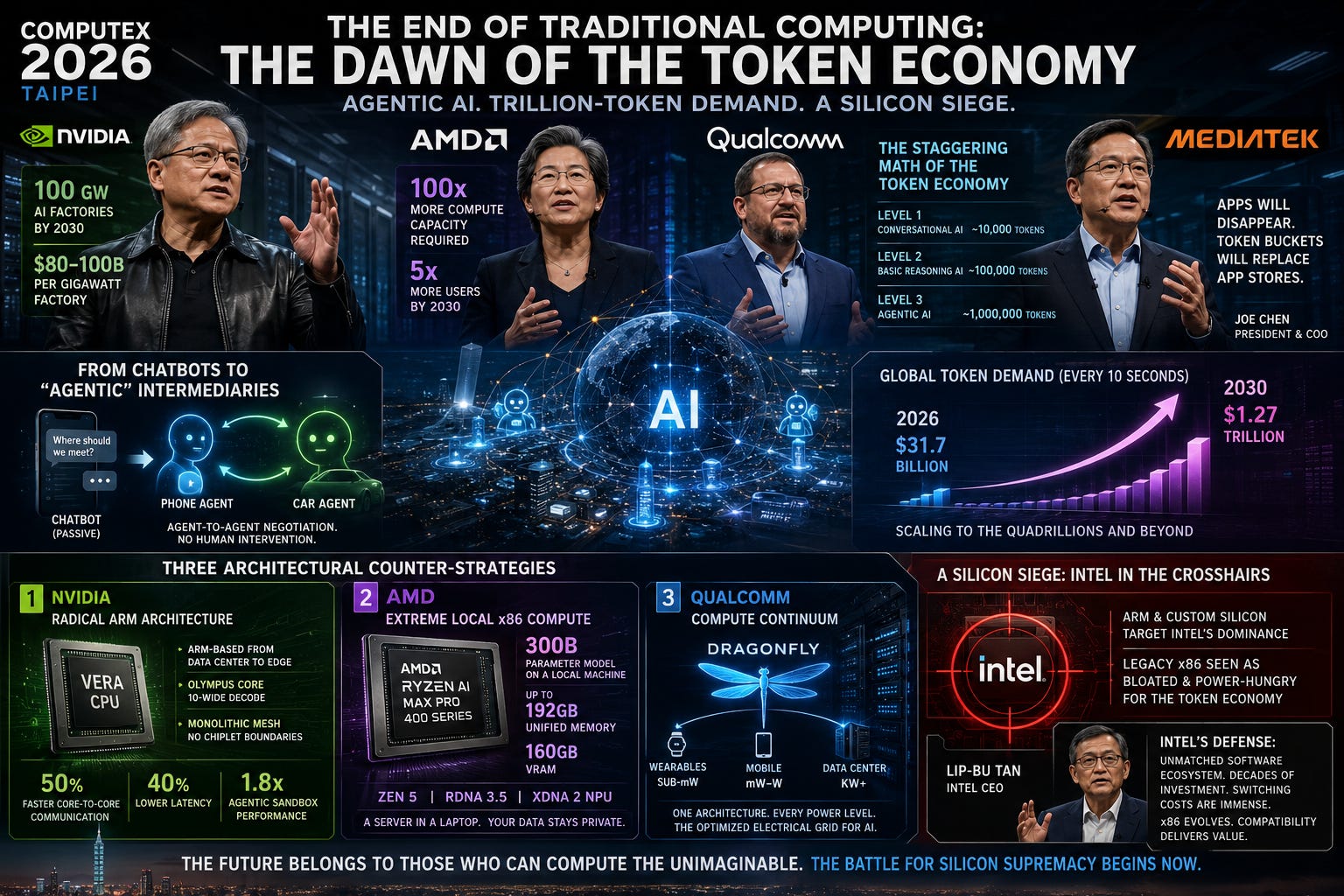
On the eve of the official kickoff of Computex 2026, the global semiconductor industry is bracing for an unprecedented structural upheaval. Pre-event keynotes from the world’s leading silicon architects—including NVIDIA, AMD, Qualcomm, and MediaTek—have collectively signaled the end of the traditional computing era. Driven by an exponential explosion in “agentic AI” and a newly emerging “token economy,” the industry’s heavyweights are aggressively dismantling decades-old hardware designs to survive a looming infrastructure bottleneck.
From Chatbots to “Agentic” Intermediaries
For the past few years, consumer interaction with artificial intelligence has been defined by passive, conversational chatbots. According to MediaTek President Joe Chen and Qualcomm CEO Cristiano Amon, that model is officially dead. The industry is rapidly shifting toward agentic AI—autonomous digital entities capable of logical judgment, independent decision-making, and background execution.
“Instead of opening a map app, then opening a text app, these agents just orchestrate tasks for you,” explained Chen in his keynote. This shift effectively breaks the traditional graphical user interface (GUI) model of “click and wait,” replacing it with background agent-to-agent negotiations. For example, MediaTek demonstrated a car-based AI agent that seamlessly coordinated schedules and logistics with a user’s phone agent, without any human intervention.
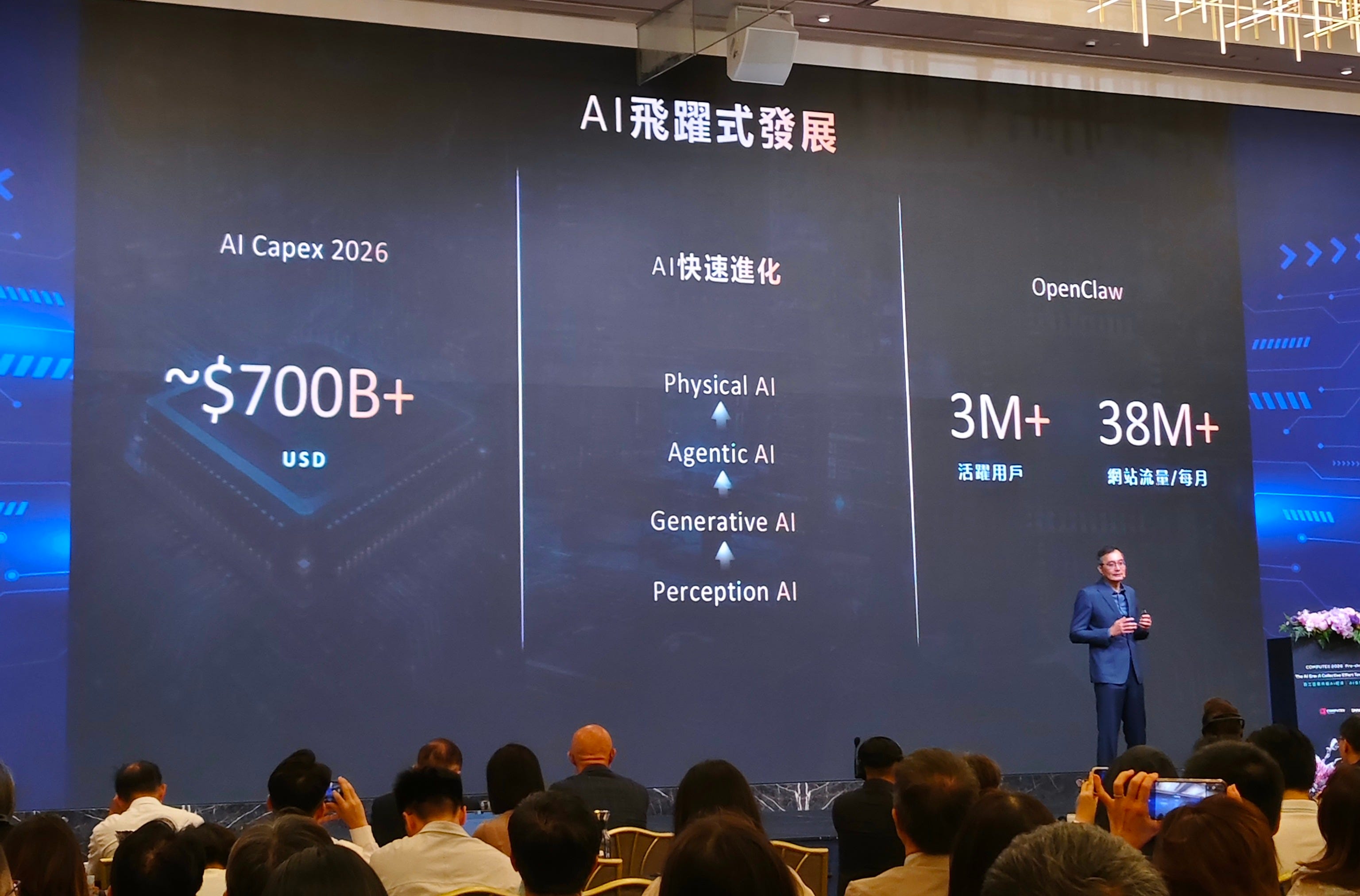
The Staggering Math of the Token Economy
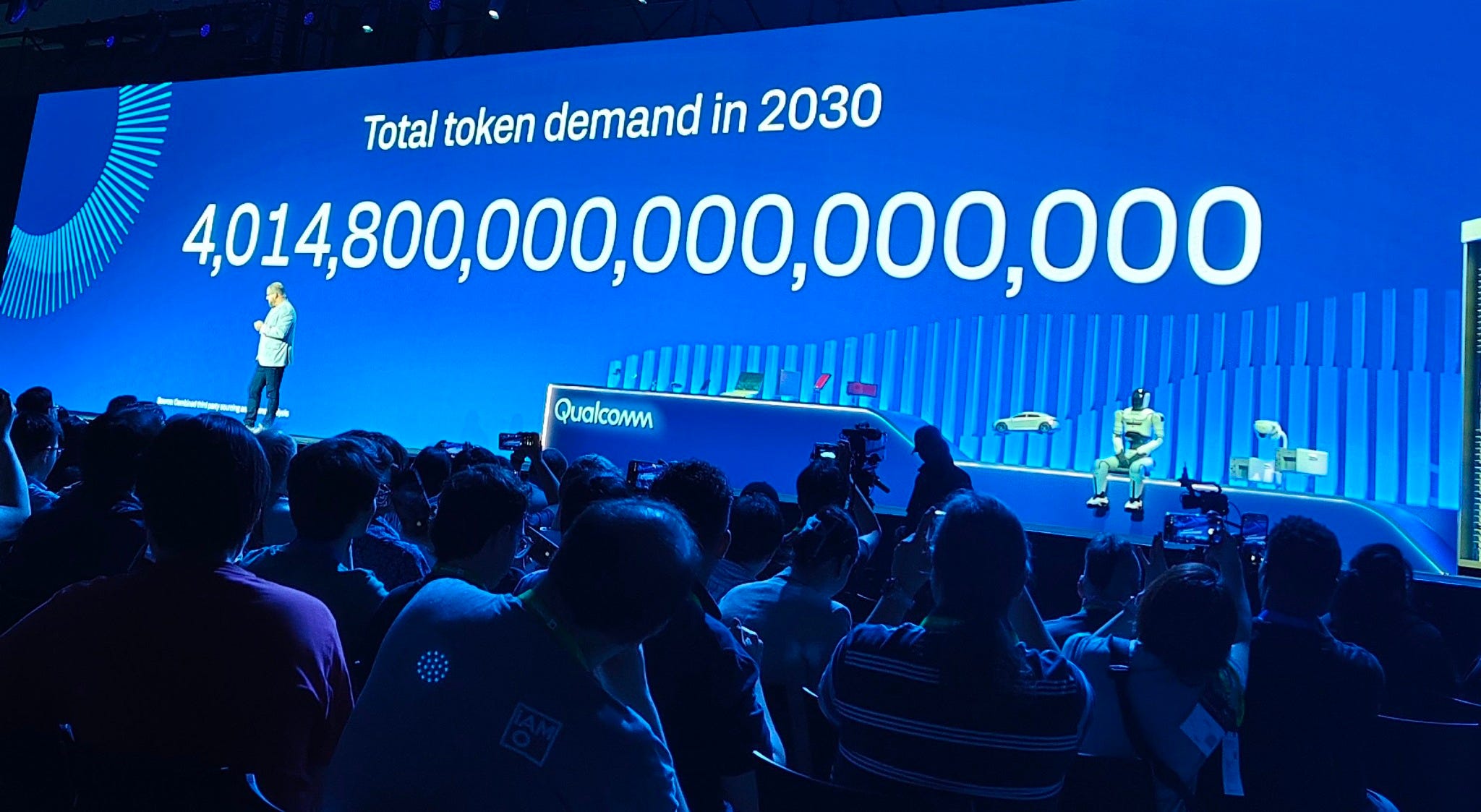
While autonomous AI agents promise seamless productivity, the underlying compute cost is structurally staggering. Qualcomm’s Cristiano Amon used his pre-event stage to introduce the concept of “token math,” outlining the massive data processing scaling laws:
Level 1 (Conversational AI): Requires roughly 10,000 tokens per task.
Level 2 (Basic Reasoning AI): Jumps to 100,000 tokens per task.
Level 3 (Agentic AI): Demands a massive 1,000,000 tokens for a single background operation.
Because these agents operate continuously, global token demand within a mere 10-second window is projected to skyrocket from $31.7 billion in 2026 to $1.27 trillion by 2030, eventually scaling into the quintillions. This hyper-monetization of data units has led MediaTek to predict a complete disruption of consumer software. In the near future, traditional app stores may vanish, replaced by monthly “token buckets” that users purchase to fuel their background AI ecosystem.
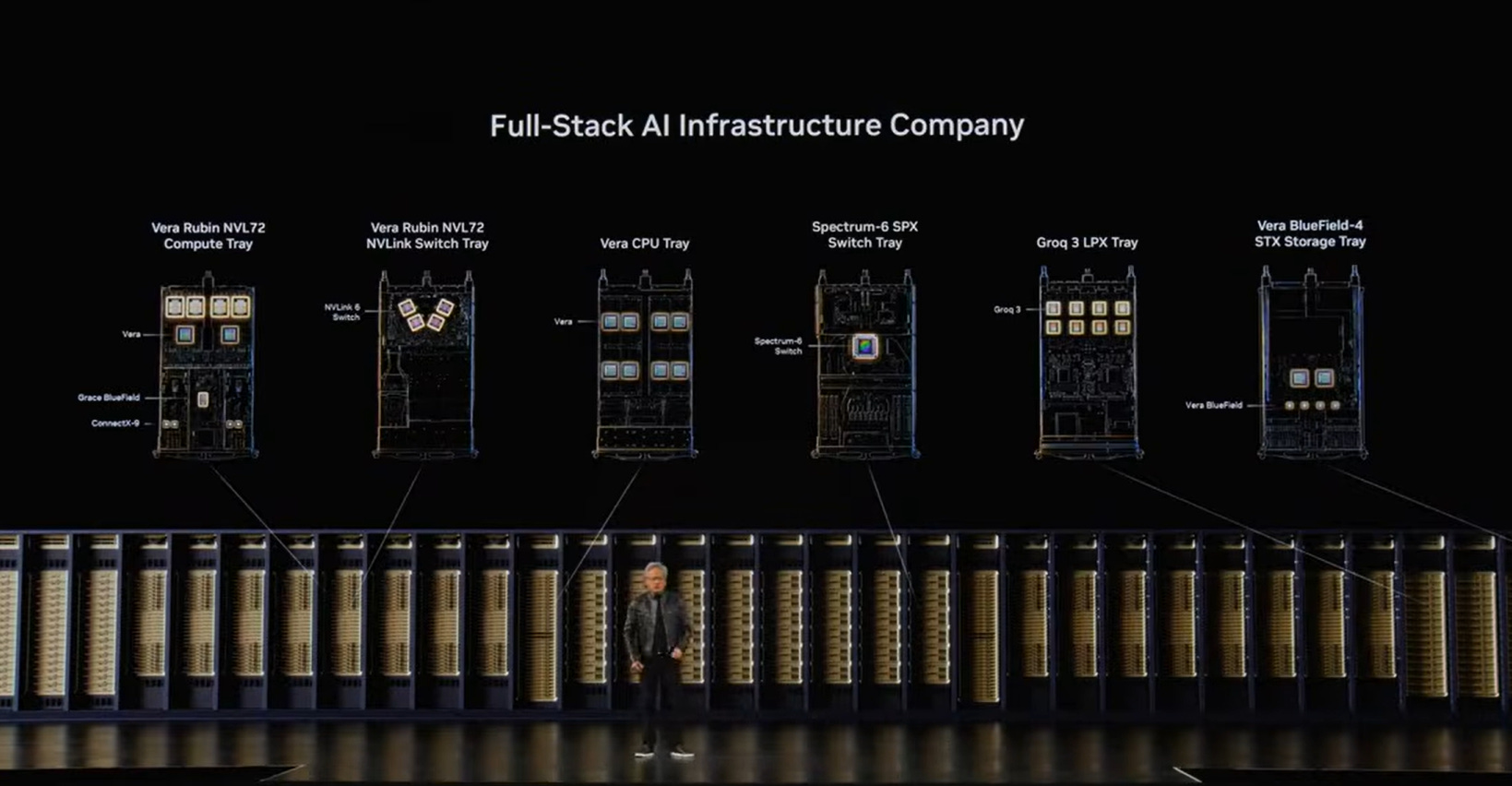
The Infrastructure Bottleneck: $100 Billion AI Factories
To support quintillions of tokens, AMD CEO Lisa Su estimates the world requires a 100-fold increase in compute capacity, even as the global AI user base scales fivefold from 1 billion to 5 billion users.
To meet this demand, NVIDIA CEO Jensen Wang revealed during his address that 100 gigawatts of “AI factories” (specialized data centers) are scheduled to come online by the end of the decade. However, capital expenditures are ballooning dramatically. The cost to build a single gigawatt factory has surged from $20–$30 billion to an astronomical $80–$100 billion per gigawatt.
NVIDIA justifies these eye-watering costs through massive enterprise productivity gains. While the world’s 30 to 40 million software developers currently earn roughly $3 trillion in aggregate wages, Wang noted that AI agents are already generating $9 trillion in economic productivity. In a real-world case study with chip-design firm Cadence, AI super-agents compressed highly complex chip-design verification cycles from weeks to mere hours—a 40x acceleration that justifies the premium cost of token consumption.

Silicon Architecture Re-engineered: Three Counter-Strategies
Faced with the reality that traditional CPUs built for human typing speeds are obsolete, the major chipmakers used their pre-event keynotes to lay out three distinct architectural factions:
1. NVIDIA’s Radical ARM Architecture
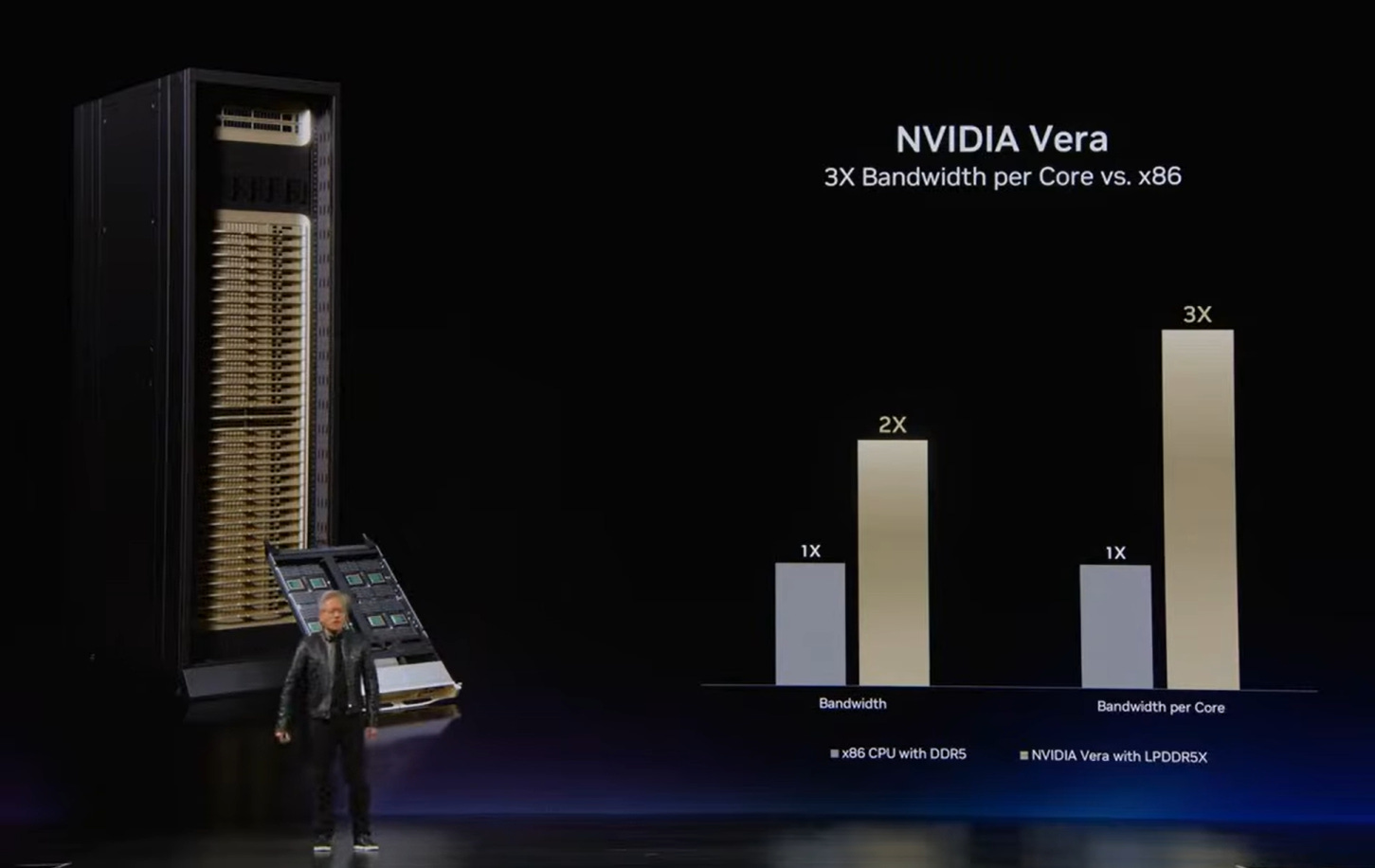
NVIDIA has effectively abandoned human-centric, cloud-rented x86 architectures. They announced the Vera CPU, an ARM-based chip built from the data center to the edge. It features an Olympus core, a 10-wide decode engine, and a monolithic mesh that completely removes chiplet boundaries. By eliminating physical data “toll booths,” Vera delivers 50% faster core-to-core communication and 40% lower latency via integrated LPDDR5X memory, resulting in 1.8x the agentic sandbox performance of traditional x86 processors.
2. AMD’s Extreme Local x86 Compute
AMD is placing its bet on massive local hardware to alleviate “cloud meter anxiety” and data privacy concerns. CEO Lisa Su introduced the Ryzen AI Max Pro 400 series, the world’s first x86 client processor capable of running a massive 300-billion-parameter model entirely on a local machine. Built on Zen 5, RDNA 3.5 graphics, and an XDNA 2 NPU, the chip boasts up to 192GB of unified memory and 160GB of VRAM. This “server in a laptop” ensures that sensitive user data—like reading personal emails or calendars—never leaves the local device.
3. Qualcomm’s Compute Continuum
Recognizing that continuous background AI processing will instantly drain mobile batteries, Qualcomm is leveraging its ultra-efficient heritage to span the entire power spectrum. Their headline reveal, Dragonfly, marks Qualcomm’s official entry into the high-performance data center server market. Qualcomm’s strategy is to act as a highly optimized electrical grid, providing seamless hardware infrastructure ranging from sub-milliwatt wearables to kilowatt-scale data centers.

A Silicon Siege: Intel in the Crosshairs
The aggressive moves detailed in these pre-event keynotes represent a coordinated “silicon siege” targeting the market dominance of Intel. By pushing custom, low-latency, low-power ARM architectures, competitors are openly branding Intel’s legacy x86 architecture as too bloated and power-hungry for the token economy.
Intel CEO Lip-bu Tan is scheduled to take the official Computex stage tomorrow to mount a fierce defense of the x86 ecosystem. Intel’s primary counter-argument is expected to center heavily on switching costs. Because decades of legacy enterprise software, banking infrastructure, and government systems are natively built on x86, Intel aims to prove its next-generation chips can deliver comparable AI efficiency without forcing corporations to rewrite millions of lines of legacy code for ARM.
As Computex 2026 officially opens tomorrow, the stakes could not be higher. The tech industry is no longer just building faster processors; it is re-engineering global silicon to support a self-sustaining economy of digital machines.


