
Vietnam's Semiconductor Ambitions Gain Momentum, with Intel at the Center of Its Rise
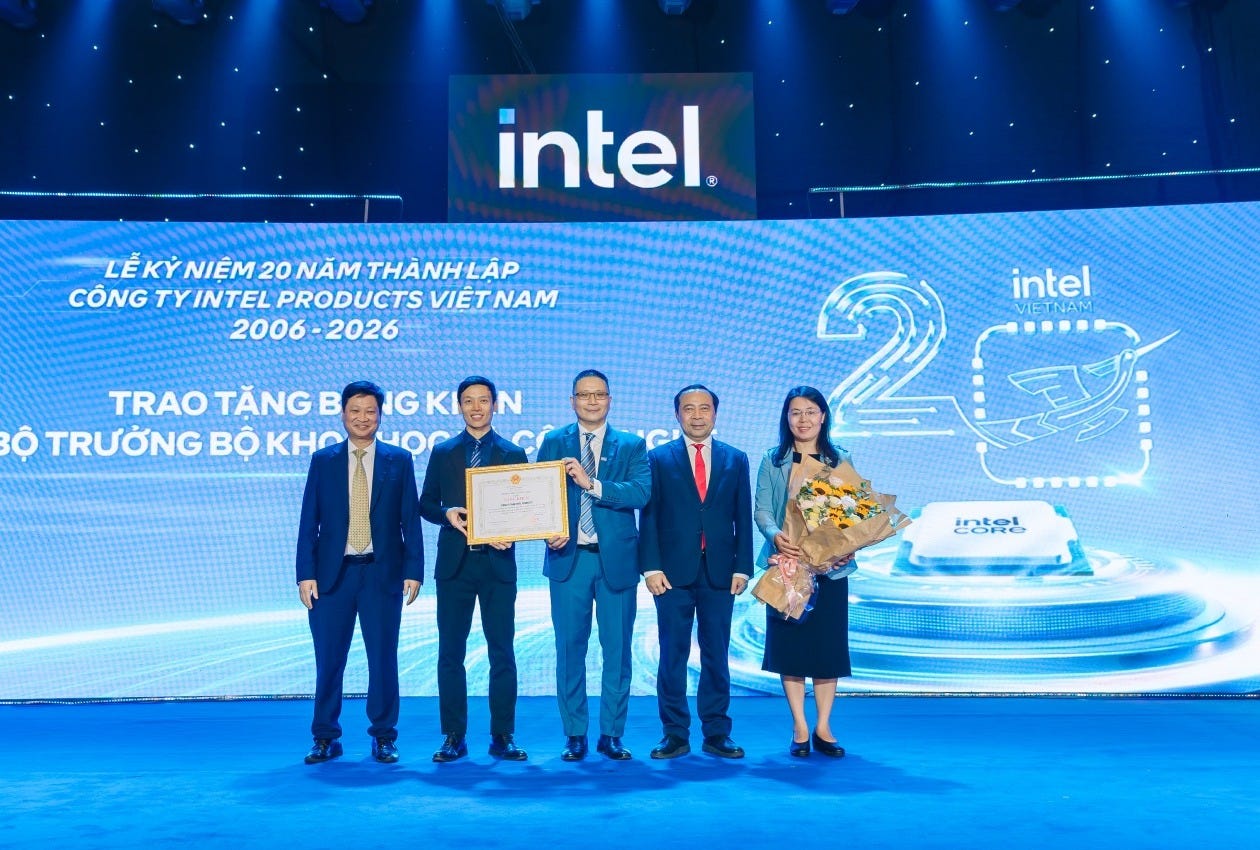
As Vietnam pushes to become a major player in the global semiconductor industry, Intel’s 20-year presence in the country offers a glimpse into how Hanoi’s long-term strategy is beginning to pay off.
The Vietnamese government has identified semiconductors as a cornerstone of its economic transformation, aiming to move the country into the ranks of high-income economies by 2045. Central to that vision is the development of a domestic semiconductor ecosystem spanning talent, suppliers, manufacturing and research capabilities.
Few companies have contributed more to that effort than Intel.
This month, Intel celebrated the 20th anniversary of Intel Products Vietnam (IPV), its assembly and test facility in Ho Chi Minh City. Since operations began in 2006, Intel has invested $4.1 billion in Vietnam, transforming the site into the largest assembly and test facility in its global manufacturing network.
The facility has produced more than 4 billion semiconductor products and generated over $110 billion in export value. In 2025 alone, IPV contributed $11.67 billion in exports, accounting for 57% of the total export turnover of Saigon Hi-Tech Park and approximately 12% of Ho Chi Minh City’s exports.
Beyond the impressive manufacturing figures, Intel’s presence illustrates the first phase of Vietnam’s semiconductor strategy: establishing itself as a reliable hub for assembly, testing and packaging (ATP), the final stage of chip production before products reach customers.
Over the past decade, Vietnam has successfully attracted leading global technology companies to build ATP operations, creating a foundation from which the country hopes to move into higher-value activities such as chip design, R&D and advanced manufacturing.
Intel’s facility has become one of the strongest examples of that strategy in action. Today, the site handles a broad product portfolio, including Intel Series 3 processors designed for next-generation AI PCs based on the company’s advanced Intel 18A process technology.
Talent development has become another pillar of Vietnam’s semiconductor ambitions. The government has set a goal of developing 50,000 semiconductor engineers by 2030, and Intel has played a significant role in supporting that objective.
Working with the Vietnamese government, universities and international partners, Intel helped launch engineering and STEM education initiatives that have trained more than 9,000 professors and contributed to the development of nearly 10,000 Vietnamese engineers, technicians and business leaders. The company has also donated semiconductor assembly and testing equipment to educational institutions to strengthen hands-on training and research capabilities.
Intel’s impact extends beyond its own operations. The company says it has helped more than 600 local suppliers meet global manufacturing standards, contributing to the supplier ecosystem that Vietnam views as essential for becoming an indispensable link in the global semiconductor supply chain.
The timing is favorable for Vietnam’s ambitions. The country has emerged as a strategic partner in the United States' and its allies' ongoing efforts to diversify semiconductor supply chains beyond China. Hanoi has also intensified efforts to attract additional investment in semiconductor research, training and manufacturing as part of a broader national strategy to become a key semiconductor supplier by 2050.
Against this backdrop, Intel’s two decades in Vietnam represent more than a corporate milestone. They demonstrate how sustained investment, workforce development and ecosystem building can help transform a country from a low-cost manufacturing destination into an increasingly important player in the global semiconductor industry.
As Vietnam seeks to move up the semiconductor value chain, Intel’s experience may serve as both a blueprint and a benchmark for the next stage of the country’s technological rise.
As one of Intel’s three facilities in the Asia-Pacific and Japan region, IPV is expected to continue supporting innovation, talent development and semiconductor growth in Vietnam.