
IP Insight: What Defensive Leverage Does TSMC Hold Against HPE's Infringement Claim? (Part 2)
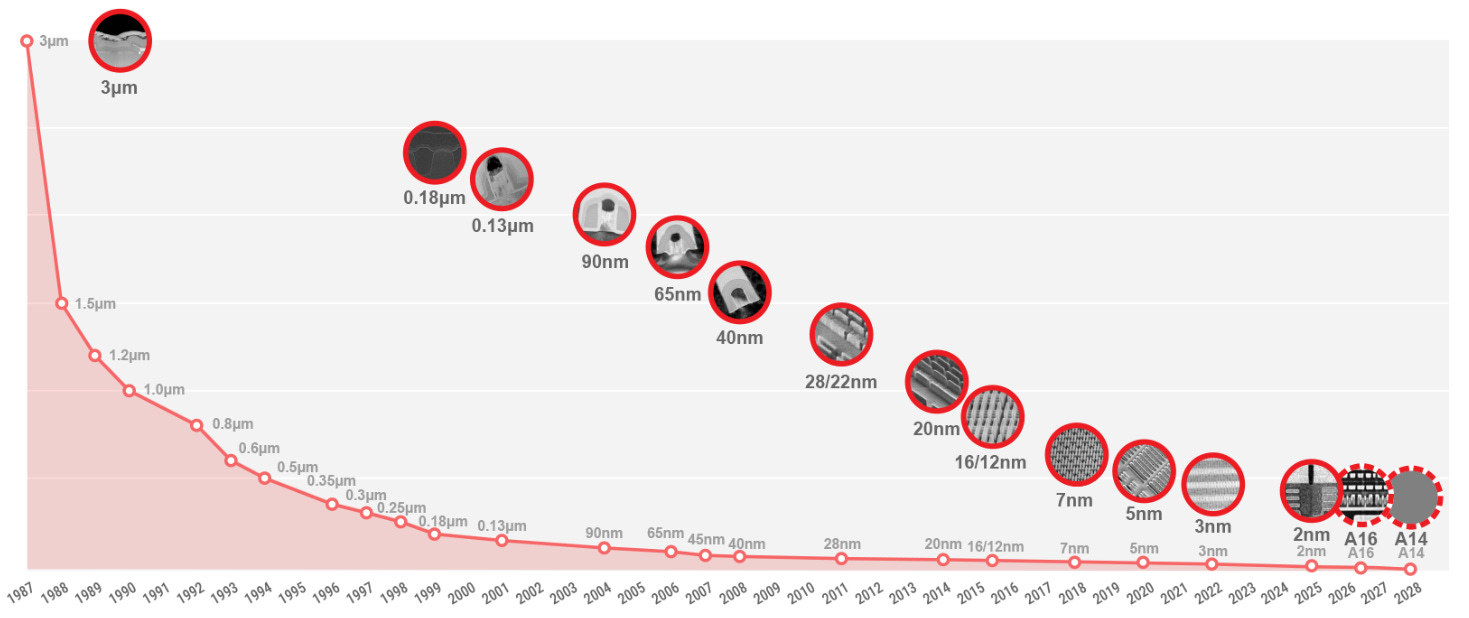
In the global semiconductor supply chain, patent litigation has always been an extension of commercial competition. Recently, two Non-Practicing Entities (NPEs), Longitude Licensing and Marlin Semiconductor, officially filed a lawsuit with the U.S. International Trade Commission (ITC), accusing the foundry leader, TSMC, of patent infringement.
Notably, these two entities do not engage in manufacturing or R&D themselves; their core legal weapon consists of patent technologies acquired from UMC in 2021. While this lawsuit appears, on the surface, to be a proactive strike by NPEs, it reflects the legal battles over patent asset transfers and technological confrontation during the transition period between mature and advanced semiconductor manufacturing processes.
Focus of the Legal Battle: Dozens of Allegations Converge onto 4 Core Claims
In the initial phase of this ITC lawsuit, the plaintiffs originally asserted a scope covering 5 patents and dozens of claims. However, following extensive written pleadings in court and a robust defense from TSMC’s legal team, the plaintiffs voluntarily withdrew the majority of these items.
The scope of litigation effectively impacting TSMC has now narrowed down to the following 2 patents, totaling 4 core claims:
US 9,093,473 (Claims 1–2): Relating to metal-oxide-semiconductor (MOS) transistor gate fabrication technology.
US 9,184,292 (Claims 3–4): Relating to the material and structural design of odd and even fins in FinFETs (such as the application of SiC or SiGe).
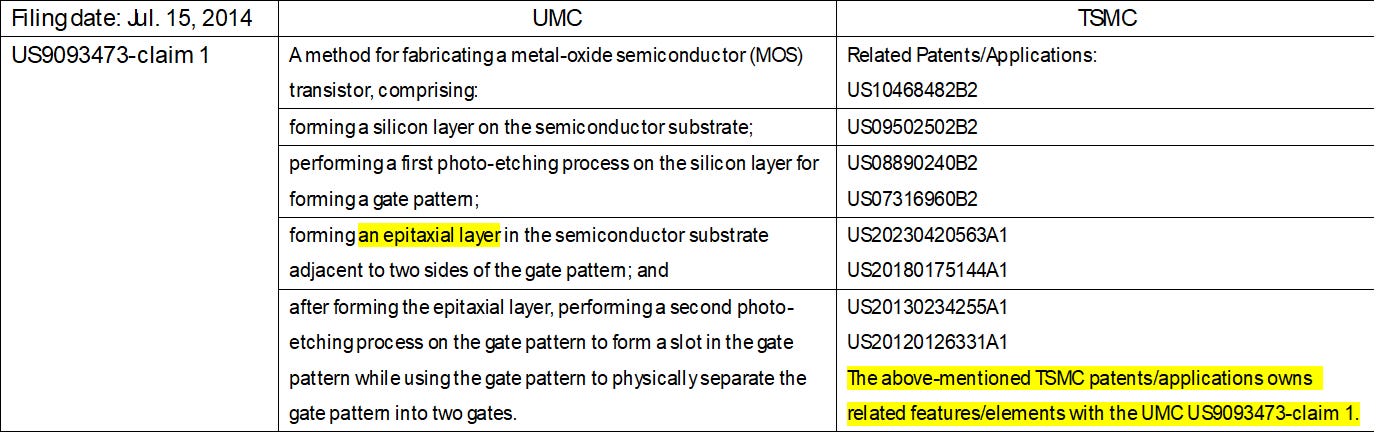
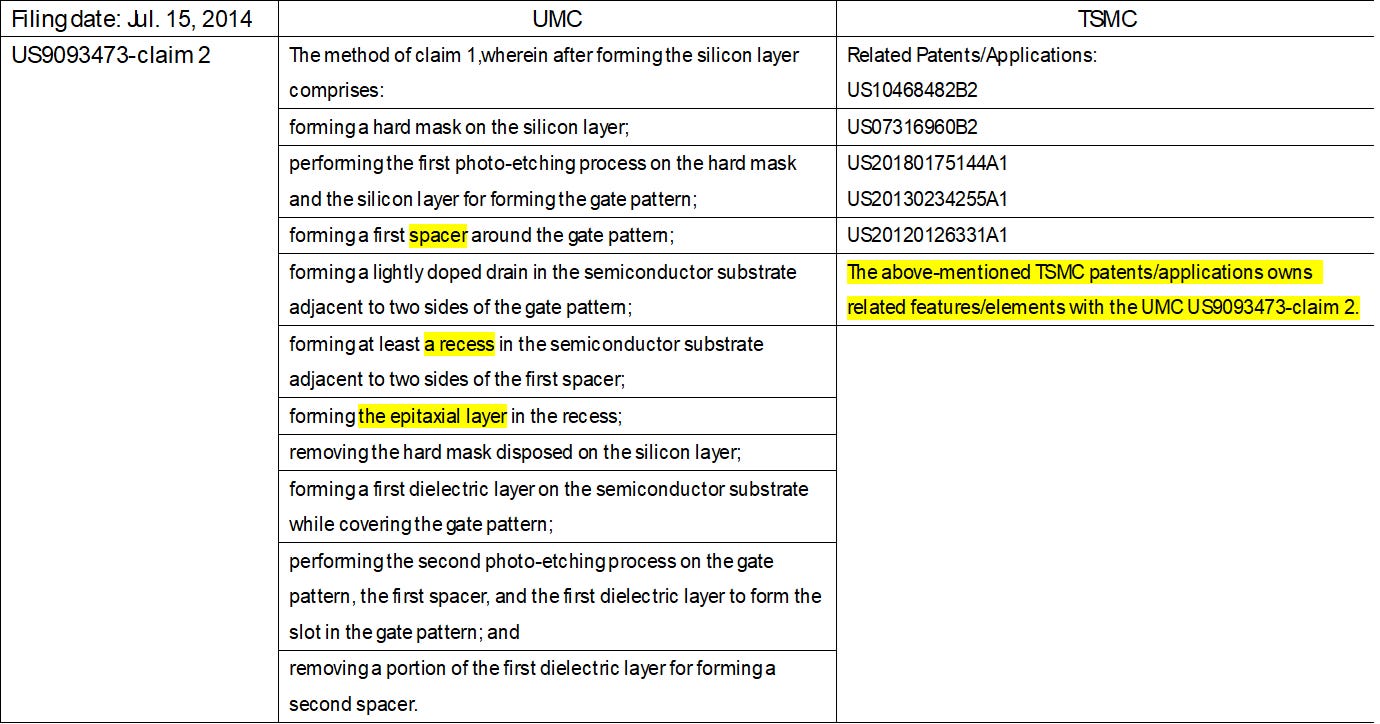
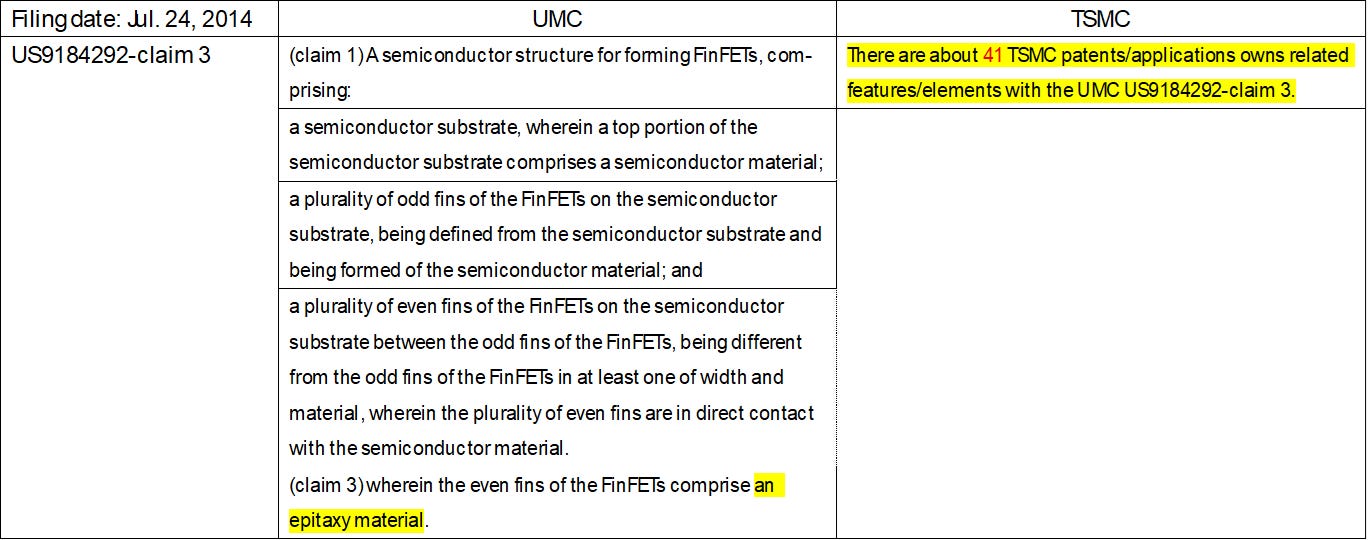
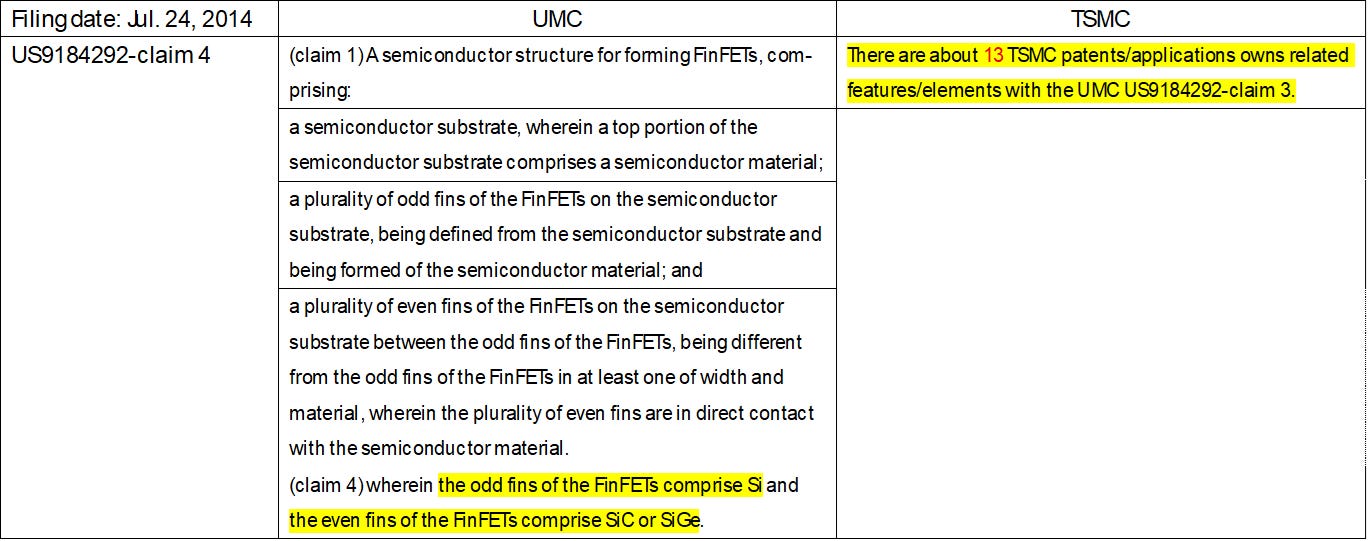
Although the scope of the lawsuit has been significantly narrowed, the remaining claims typically fall within technical definitions that are highly critical and offer greater flexibility in legal interpretation. Therefore, they constitute the core battlefield for technical infringement determination and legal defense.
Regarding the aforementioned two UMC patent scopes—US 9,093,473 (Claims 1–2) and US 9,184,292 (Claims 3–4)—the former covers MOS transistor manufacturing processes, while the latter addresses FinFET technology. For both patent scopes, TSMC possesses corresponding and similar patent technologies that are fully capable of countering them. This strongly demonstrates TSMC’s exceptional capabilities in independent R&D and autonomous technical innovation.
A Clash of Technical Strength: TSMC Builds a Moat with a “90,000-Patent Portfolio”
Faced with the patent onslaught from these NPEs, TSMC’s core advantage lies in its long-accumulated independent R&D strength and massive patent pool.
According to data analysis from Google Patent Search, the number of patents TSMC applied for over the past 10 years exceeds 90,000, accounting for more than 90% of its total patent portfolio, which demonstrates immense recent R&D momentum. In comparison, UMC’s patent applications over the past decade hover around 20,000+.
If the focus is narrowed down specifically to the “N7 (7nm) advanced process” technologies at the heart of this lawsuit, the patent layouts of the top three semiconductor giants reveal a pronounced technical hierarchy:
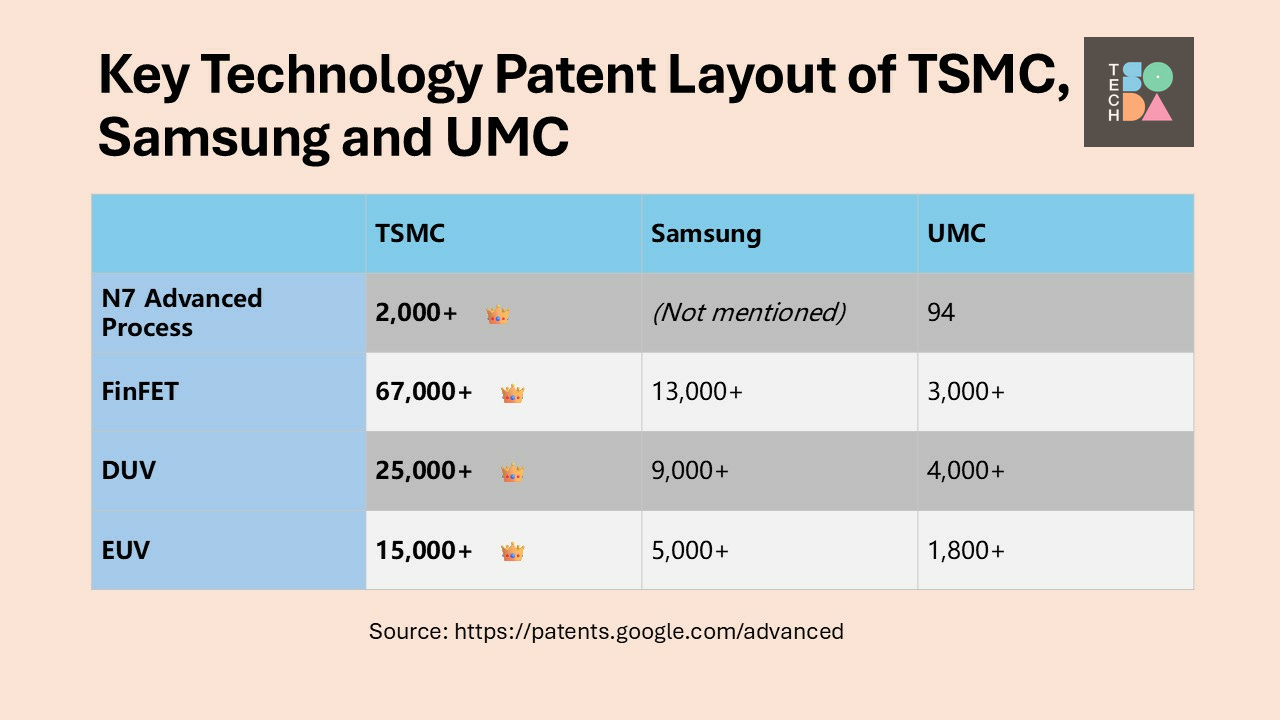
The data shows that TSMC holds an overwhelming advantage in patent counts across N7, FinFET, DUV, and the more advanced EUV technologies. In response to the plaintiffs’ asserted US 9,093,473 and US 9,184,292 patents, TSMC itself holds dozens of highly relevant, equivalent defensive patents (for instance, approximately 41 corresponding patents specifically for the FinFET patent). This formidable cross-licensing leverage and technological parity will serve as an unshakeable shield for TSMC in its ITC defense.
Furthermore, in the competitive landscape, after UMC announced its departure from advanced processes below 7nm, its N7-related patents dwindled to just 94, causing its influence to wane in this domain. Conversely, South Korea’s Samsung remains a close follower of TSMC, with robust layouts in FinFET (over 13,000 patents) and EUV (over 5,000 patents), making it the only competitor in the market with comparable technical strength.
Although this ITC infringement lawsuit—stemming from old UMC patents and launched by NPEs—carries wide-ranging legal implications that might trigger short-term market concern over regulatory risks, the depth of the respective technical patent libraries and TSMC’s highly independent innovation capabilities suggest that it will be exceedingly difficult for the plaintiffs to extract substantial financial gain based solely on these 4 claims.
Note: In our previous Part-1 report, the recorded patent search numbers for TSMC and UMC showed significant discrepancies due to differences in search platforms. To ensure content consistency moving forward, our future reports will be based on the more authoritative Google Patent Search platform (https://patents.google.com/advanced). We apologize for the prior discrepancy and offer this clarification.
Semiconductor patent wars frequently conclude with “cross-licensing” or “commercial settlements” after prolonged litigation. How this legal battle will ultimately unfold remains to be seen, and we will continue to provide follow-up coverage.
About the author:


 | A guest post by
|