
How RoboTape’s Remote-Feeding Automation Revolutionizes Industrial Tape Application in EV, Automotive, and Electronics Manufacturing
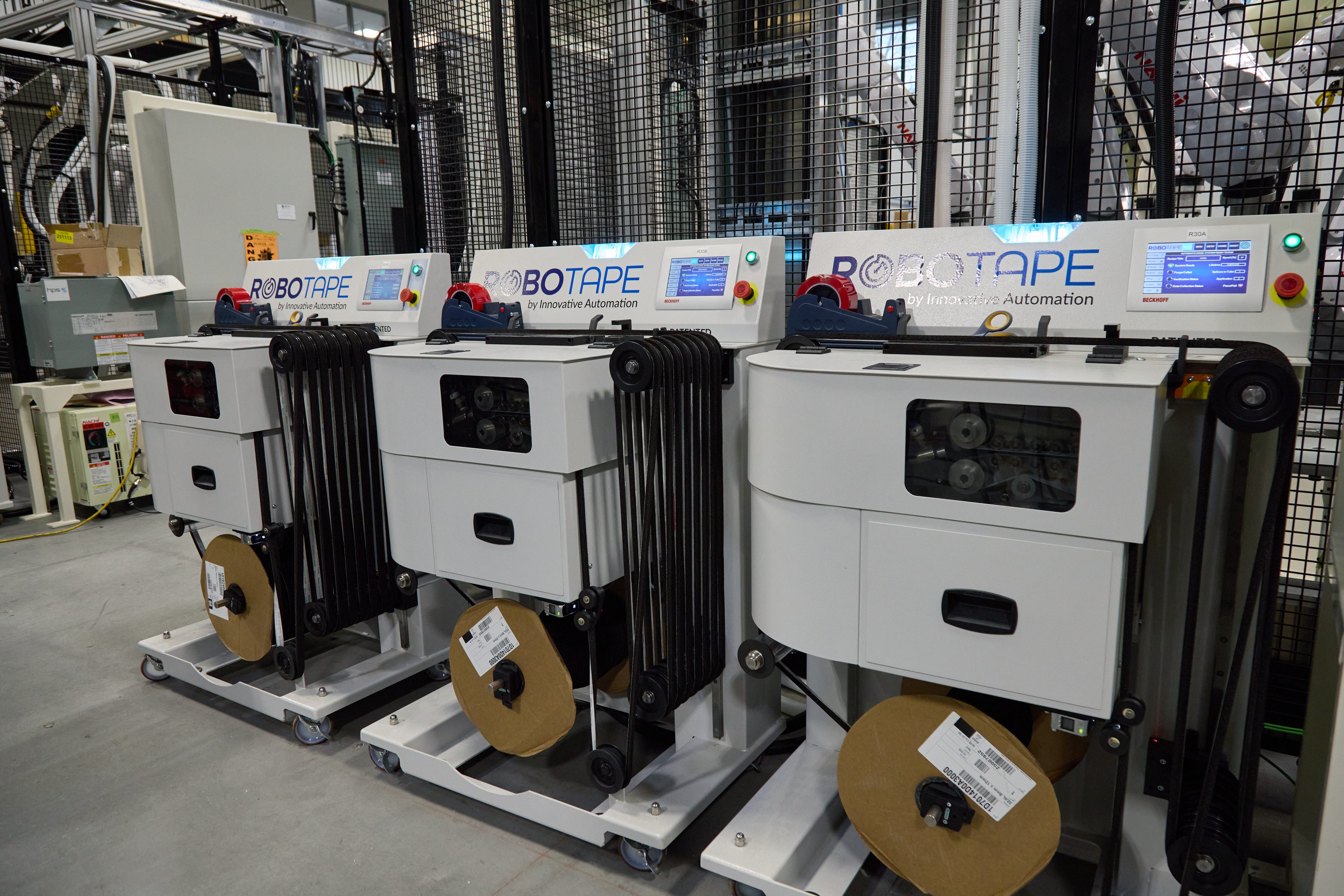
While industrial adhesive tapes are a staple in many products and manufacturing processes, Canada’s RoboTape™ has transformed the installation process to meet the demanding throughput of industries ranging from automotive to electronics. What was once a slow, manual step now operates at full production speed with the RoboTape tape automation system in 170 installations worldwide as of 2026.
First launched in 2021, RoboTape’s technology quickly caught the attention of leading tape manufacturers, including 3M™, with a collaboration formalized in 2022. The machine provides a flexible, efficient, and cost-effective method of remotely feeding tapes in applications such as automotive, appliances, batteries, electronics, HVAC (Heating, Ventilation, and Air Conditioning), solar panels, and consumer goods. It can handle diverse tape types, including felt, foam, flock, BSR (buzz squeak rattle), dielectric, dual-lock, AFT (acrylic foam tapes), and rubber.
In electronics, tapes such as 3M™ VHB™ (Very High Bond) are widely used for structural bonding in applications for display assembly, touch panels, screens, and bezel attachment, often replacing screws or other mechanical fasteners. Specialized adhesive tapes are also applied for functions such as electrical insulation, circuit protection, thermal management, and sealing (e.g., gaskets for dust and moisture protection).
Similarly, in automotive applications, tapes are applied to seal automotive speakers by creating a gasket ring, attach headliners and exterior appliques, or bonding, separating, and sealing cells in EV battery packs.
“The market is telling us where the tape is. These tapes are already used across global industries such as electronics. We aren’t creating a new industry, just a new way to apply these tapes. This improves quality, throughput, and efficiency for our customers,” says Zac Cutt, research and development group leader at Innovative Automation, RoboTape’s parent company.
“Some customers are already using liquid or sprayed adhesives. Those can be very messy and potentially dangerous for the environment. So customers are looking to replace those types of adhesives with tapes.”
From Concept to Reality
“The machine is really only limited by the tape size,” explains Cutt, one of the automated machine’s inventors. “The tape also needs to have a liner that peels off the back, which makes it compatible with our equipment.”
The current model of the machine handles tape up to 16 mm wide and 16 mm high, with an extra-large (RoboTape XL) version launching this summer that will handle up to 30 mm wide and 30 mm high.
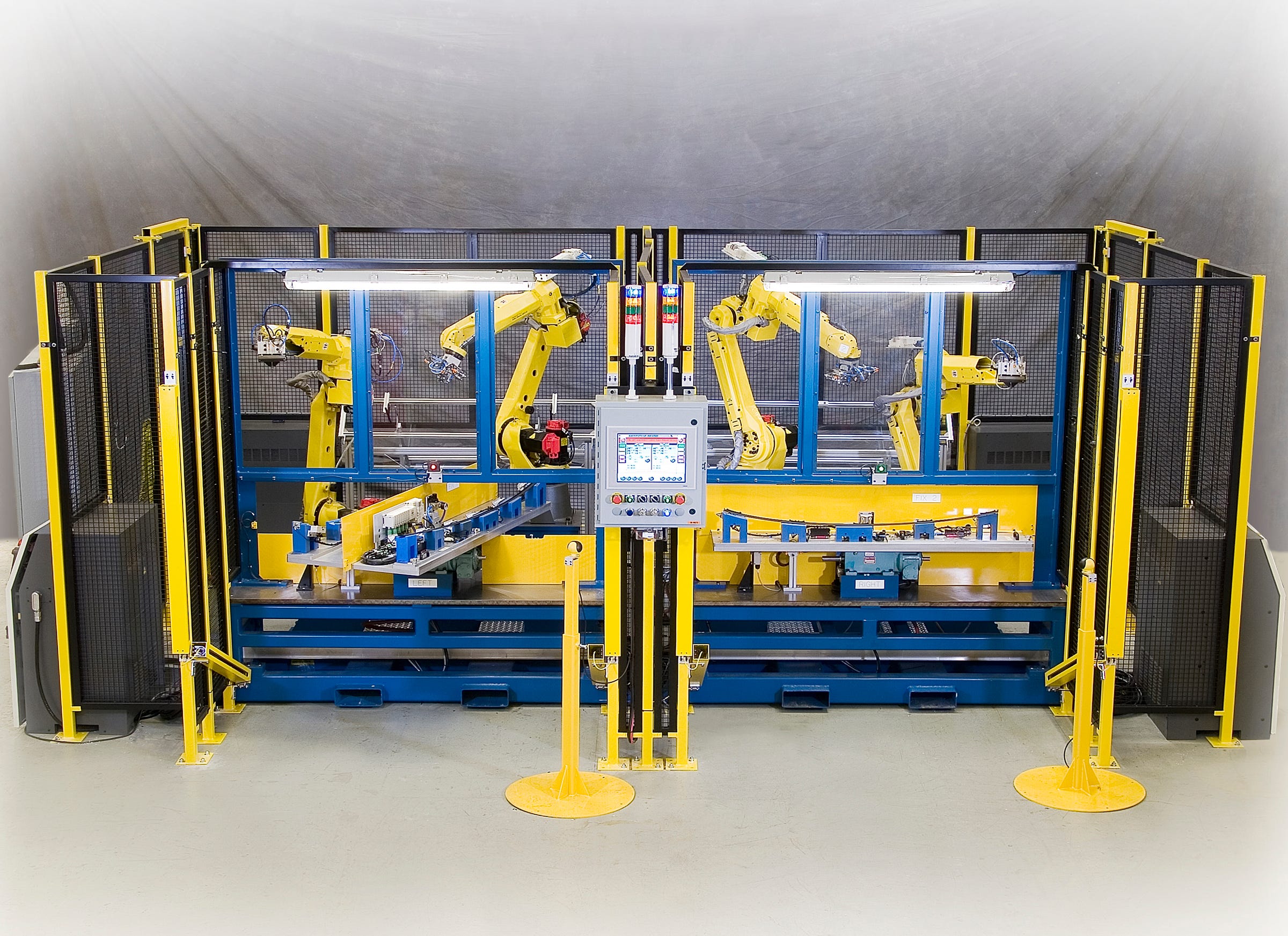
RoboTape originated in-house at Barrie, Ontario-based Innovative Automation Inc., which has served North American clients since 1989. Clients often bring prototype or future products to Innovative, looking for assembly and inspection solutions. The firm engineers and manufactures custom automated machinery in-house and delivers the solutions to clients globally.
RoboTape was born in 2019. Responding to customer interest, the team developed a robotic taping system for foam gasket tapes on automotive exterior trim panels. After building eight custom versions of the machine, company leadership realized its broader potential. Following 15,000 hours of design, engineering, and testing over 18 months, the first RoboTape machine launched in spring 2021. That figure now stands at over 35,000 hours of development time, further refining the product.
“Customers often purchase RoboTape and then request a full assembly line with RoboTape installed. It drives our custom automation business while also being sold globally as a standalone product,” notes Cutt.
A common question is whether it handles box taping for packaging. The answer is no. “Because it requires a peel liner off the back, which packaging tape does not have. Our product is focused on technical tapes; these are tapes that solve a problem.”
The Ultimate Remote-Feeding Machinery
RoboTape’s system remotely feeds tape from a large external spool—five to ten times bigger than competitors’—often reducing inventory types to a single spool. Competing systems typically store tape directly on the robot head from inside the work cell. Remote feeding, covered by RoboTape’s core patent, allows faster robot operation, increased maneuverability, easier and safer access for spool changes, and longer runtime.
“We call the technology remote feeding, able to feed tapes from another location. That’s covered in one of our main patents. We have a patent on that technology,” Cutt notes. This design decision provides many benefits to the customer while also offer flexibility for the installation and integration methods.
The machine can be repurposed after a typical production program of four to five years. One North American automotive client has fed 15 million applications so far with two original systems. Labor savings for this installation are estimated at US$1 million over the life of a four-year program.
“When you’re buying a RoboTape system, payback could be one to three years. After that, 10 years from now, 15 years from now, 20 years from now, it’ll still be running in your facility making you money,” he says.
Future Outlook
Innovative Automation continues to launch new products that serve manufacturing facilities around the globe. In 2025, the company launched RoboClip, a robotic system for installing clips utilized in the assembly of automotive components, appliances, and industrial applications. Together, RoboTape and RoboClip assist in the assembly of components in high-volume manufacturing environments.
RoboTape is coming to Computex in Taiwan on June 2-5. Book a meeting with RoboTape at the Ontario Pavilion or online before the exhibition!