
China’s AI Hardware Breakthrough Is Gaining Speed
From smuggled ion implanters and improving 7nm yields to 70% at SMIC, to Taiwan’s record glass fiber exports, the scale of China’s AI hardware buildup is coming into view.
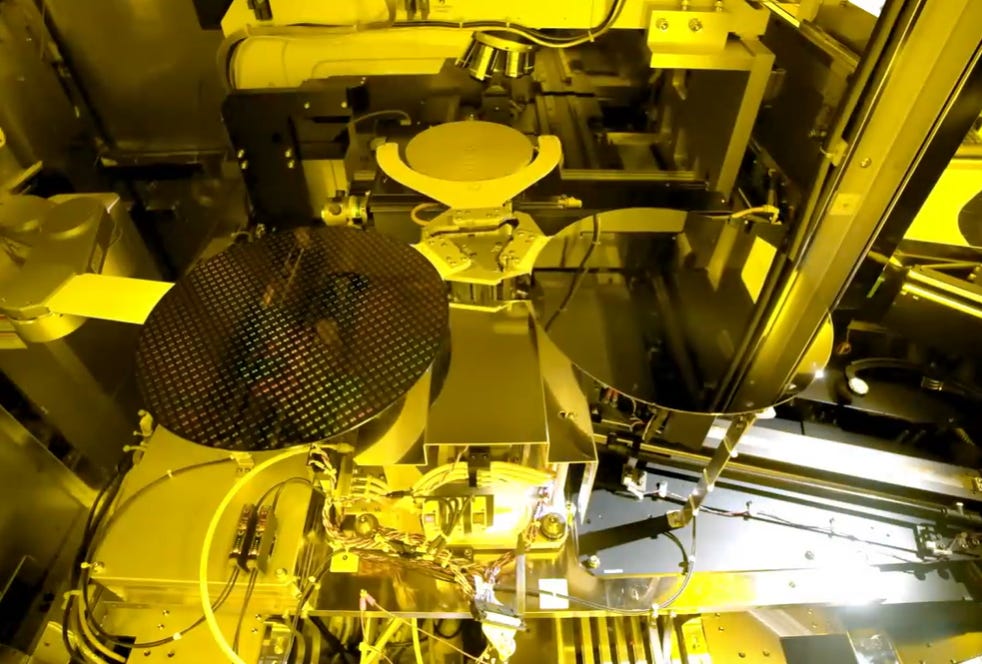
The recent US$252 million settlement between the U.S. Department of Commerce and Applied Materials (AMAT) and Applied Materials Korea (AMK) provides more than just a legal headline—it offers a critical missing piece of the puzzle regarding China’s semiconductor progress. When viewed alongside record-breaking trade data from Taiwan, a clear picture emerges of how China eventually managed to achieve a 70% yield on 7nm chips claimed by an analyst despite aggressive Western sanctions.
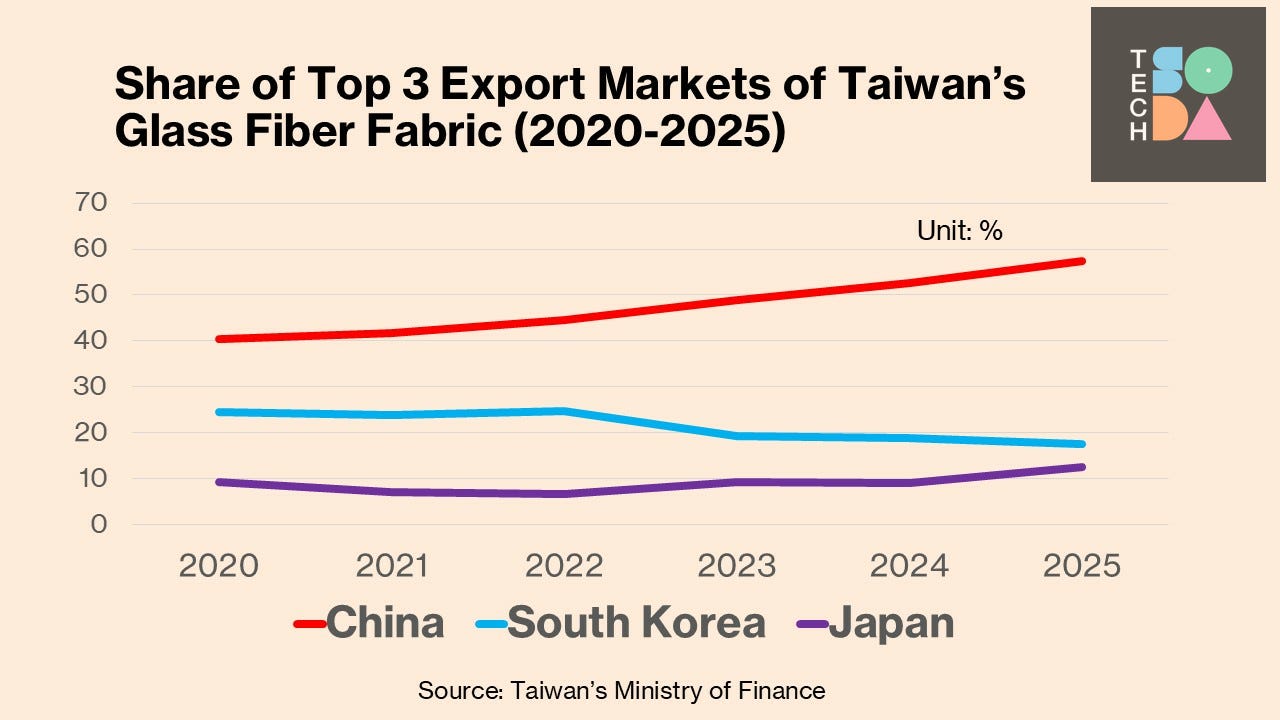
In the first eleven months of 2025, Taiwan’s exports of high-end glass fiber fabric surged to a record US$350 million—a 39.9% year-on-year increase, while nearly 60% was shipped to China. While these shipments are perfectly legal, they serve as a high-fidelity “thermometer” for China’s AI ambitions. As high-performance glass fiber fabric is the essential structural backbone for AI servers and IC substrates, this surge confirms that China is not just making chips, but successfully integrating them into large-scale AI infrastructure.
AI chips generate extreme heat and require high-frequency signals, which in turn require "ultra-thin, high-quality" glass fiber. This explains why the 39.9% increase in export value isn't just about volume—it's about price and complexity.
The Role of the “Smuggled” Ion Implanters
The AMAT settlement centers on the unauthorized shipment of ion implanters—highly specialized machines used to “dope” silicon wafers to create transistors. Between 2021 and 2022, dozens of these machines were rerouted through South Korea to bypass “Entity List” restrictions on SMIC, China’s leading foundry.
The arrival of these precision tools likely provided the technical foundation for SMIC’s yield breakthrough. While China remains barred from the latest EUV (Extreme Ultraviolet) lithography, the availability of high-end ion implanters, combined with Self-Aligned Quadruple Patterning (SAQP) on older DUV machines, has allowed SMIC to bridge the gap.
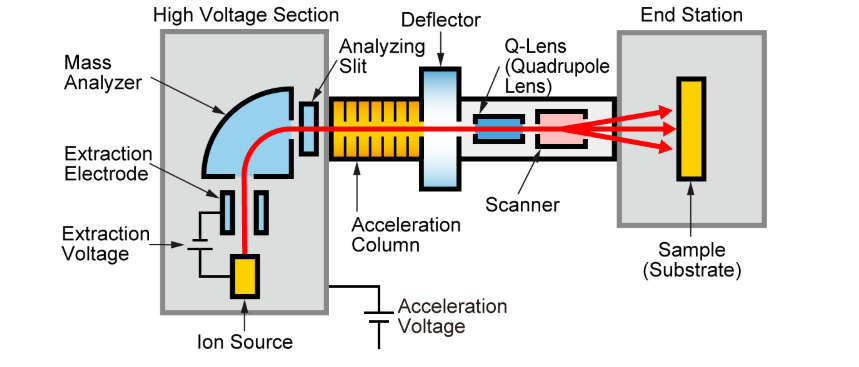
According to BIS, in 2021 and 2022, AMAT violated BIS’s requirement to obtain a license before shipping to a company on the Entity List by shipping ion implanters first to AMK in Korea for assembly, and then onward to China, without applying for and receiving an export license. The value of merchandise illegally shipped was approximately $126 million.
Judging from the fact that the ion-implanters sold by AMAT and AMK to China are used in advanced node semiconductor manufacturing processes while the glass fiber fabric form the structural backbone of PCBs and IC substrates used in AI servers, chips, and mobile devices, the surge in China’s share in Taiwan’s glass fiber fabric exports over the past six years may not be a coincidence.
The data recently released by Taiwan’s Ministry of Finance (MOF) showed that China’s share of Taiwan’s glass fiber fabric increased from 40% to 57.3% between 2020 and 2025. (See chart)
As AI and high-speed computing advance, ultra-thin, high-quality electronic-grade glass fiber fabric has become an essential foundation for next-generation electronics.
While SMIC is reportedly experimenting with 5nm processes, yields remain poor. However, at 7nm, China has found a “sweet spot” that allows for mass production of processor chips like Huawei’s Ascend 910 series.
The System-Level Countermove
Because China cannot yet match the raw transistor density of NVIDIA’s latest Blackwell chips, they have pivoted to what Nobunaga Chai, a senior semiconductor analyst and deputy director at Cloud Express, calls a “disruptive redesign” at the system layers. By using advanced packaging—supported by that record-setting Taiwanese glass fiber fabric —and optical interconnects, Huawei is compensating for individual chip limitations through superior server architecture.
The question is, since EUV is banned, can China really manufacture enough advanced chips to be used in their AI servers? China claims that it is driving towards self-sufficiency in AI computing and waged a “de-Americanization” campaign to kick US products out. Both SMIC and Shanghai Huali Microelectronics Corporation (HLMC) are capable of manufacturing 7nm chips with Deep Ultraviolet lithography equipment.
SMIC posted record revenue and strong earnings growth in 2025, even as gross margins declined, likely reflecting a production ramp at 7nm-class nodes.
Fourth-quarter and full-year sales reached new highs, driven by China’s push for semiconductor self-sufficiency. However, gross margin fell to 19.2% in 4Q25 and is expected to remain under pressure, as higher costs of multiple patterning with DUV lithography machines at 7nm-equivalent processes weighed on profitability. The results suggest SMIC is prioritizing advanced-node output growth over near-term margins.
SemiAnalysis wrote in 2023 that to prevent China from achieving high-volume 7nm production would require restricting not only advanced DUV tools like ArF immersion (ArFi), but also other DUV technologies capable of reaching a 40nm minimum metal pitch. Even without ArFi, techniques such as self-aligned quadruple patterning (SAQP) using dry ArF lithography can still achieve 7nm-class features, albeit at higher cost and lower efficiency. As a result, export controls would need to extend beyond ArFi to be fully effective, especially given national security considerations.
China has continued purchasing multiple types of DUV lithography tools from ASML in large volumes, accounting for 36% of ASML’s net system sales in Q4 2025 and 33% for the full year. The AMAT–AMK case demonstrates that U.S. export controls—relying on a whack-a-mole approach of Entity Lists and targeted restrictions—have failed to meaningfully curb China’s access to critical semiconductor manufacturing equipment.
TechSoda connects the dots for you. Please consider becoming a subscriber so as not to miss any important information.
