
Global Market Watch: TSMC Reportedly Expands CoPoS Capacity with AUO Fab Purchases
TSMC reportedly buying two AUO fabs to expand CoPoS capacity; Nanya, ADATA, and Phison all posted record July revenue; Southern Taiwan employers posted 270,000 job openings in July, up 5.2% year-on-year, as a “Chiayi-Tainan-Kaohsiung-Pingtung” semiconductor corridor takes shape; global drone market has shifted from price competition to trust and certification competition, with Taiwan pursuing Green UAS validation and alignment with Trusted UAS and Blue UAS international standards and other tech news:
I. Semiconductors
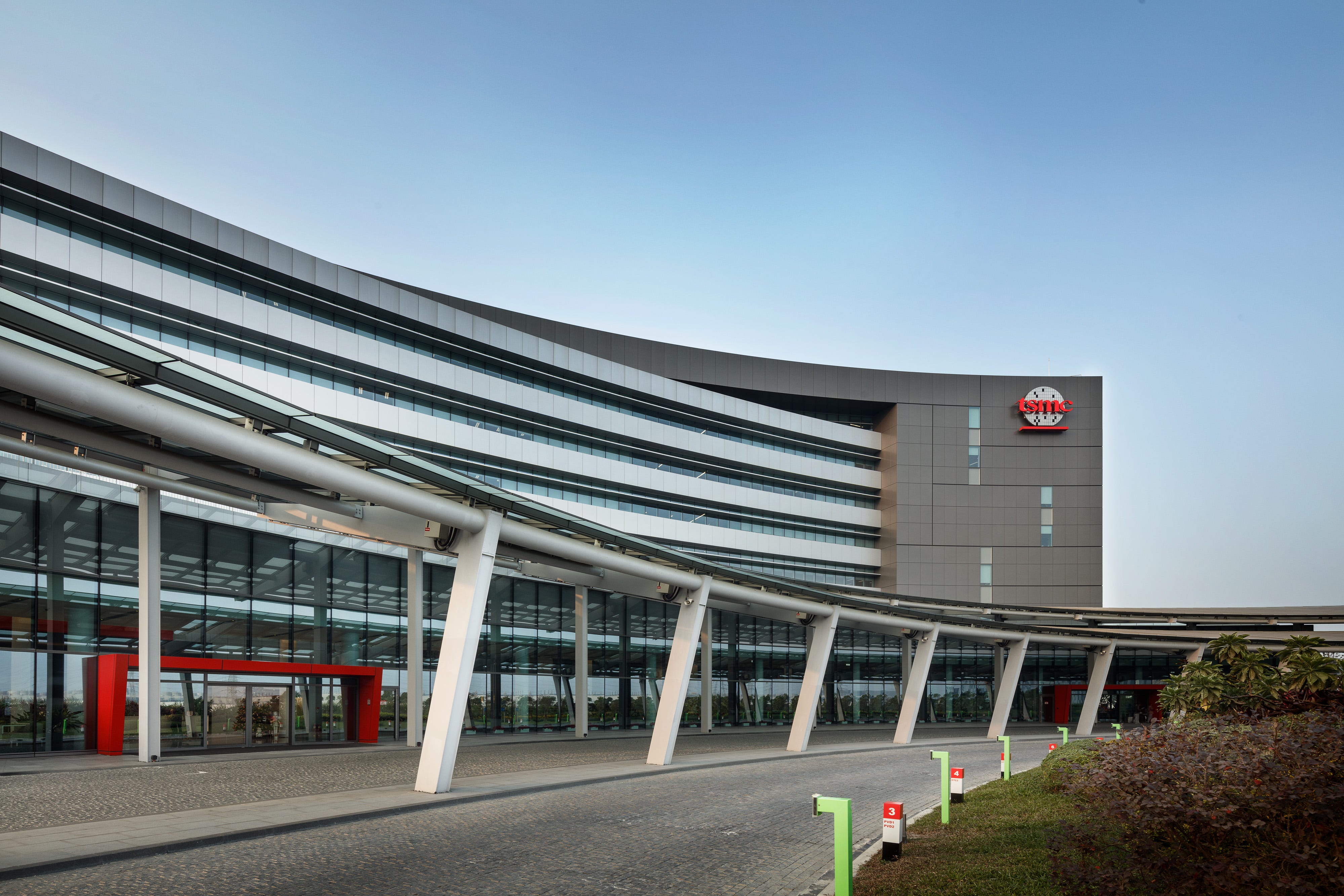
1. TSMC Reportedly Buying Two AUO Fabs Near Its Central Taiwan Site to Expand CoPoS Capacity
The story: TSMC is reportedly in talks to buy AUO’s L7 and L5C fabs adjacent to its Central Taiwan Science Park site, converting former display plants into CoPoS advanced packaging capacity, in a deal estimated above NT$30B.
Key numbers: The deal would echo TSMC’s earlier NT$197B AUO fab acquisition. AUO has divested five fab sites since 2021, including deals with UMC, Micron, Powerchip, and ASE, pivoting toward glass substrate technology.
Why it matters: Repurposing display fabs for chip packaging shows AI-driven demand for glass substrate capacity now outweighs legacy display manufacturing space, and would be TSMC’s most direct move yet to build an in-house CoPoS supply chain.
2. Taiwan Memory Makers Gain Legacy DRAM Pricing Power as Korean Rivals Exit the Segment
The story: Nanya, ADATA, and Phison all posted record July revenue as Samsung, SK Hynix, and Micron shift capacity toward HBM and premium server modules, leaving Taiwan suppliers controlling contract pricing for standard DRAM and NAND.
Key numbers: Nanya’s July revenue hit NT$43.868B, up 719.61% year-on-year. ADATA’s July revenue reached NT$18.38B, up 331.3%. Analysts expect Q3 DRAM contract prices up 20% and NAND up 35-40%.
Why it matters: Pricing leadership in mature memory specs has historically sat with Korean makers, but their pivot toward HBM has left a structural gap Taiwan is now filling, a multi-quarter shift rather than a short-term spike.
3. Southern Taiwan Job Openings Hit 270,000 in July as Semiconductor Corridor Takes Shape
The story: Southern Taiwan employers posted 270,000 job openings in July, up 5.2% year-on-year, as a “Chiayi-Tainan-Kaohsiung-Pingtung” semiconductor corridor takes shape, with electronics, software, and semiconductor roles up 15.1%, the fastest-growing category.
Key numbers: Chiayi County saw job openings grow 12.4% year-on-year, the fastest of any county. Manufacturing and quality control roles grew 24.3%, and technical/maintenance roles grew 13.2%, both sustaining double-digit growth for six straight months.
Why it matters: Double-digit growth in production-floor roles, not just office jobs, shows semiconductor fab expansion in southern Taiwan is translating into real hiring on the ground, not just capex announcements.
II. Artificial Intelligence
1. Taiwan’s Testing Equipment Industry Hits Record Output on AI-Driven Semiconductor Demand
The story: Taiwan’s metrology and testing equipment industry, led by semiconductor testing equipment, posted record 2025 output value, with growth continuing into 2026 as the sector reported a 32.8% year-on-year increase in sales in the first five months.
Key numbers: 2025 output value hit NT$193.6B, a record high, with semiconductor testing equipment and components up 60.5% to become the largest product category at 35.6% share. The sector is export-driven, with exports up 13.9% to $5.08B, led by the US and China.
Why it matters: Semiconductor test equipment is growing faster than the industry average, confirming AI-driven chip demand is flowing directly into Taiwan’s testing supply chain, not just fabs and packaging.
2. US Workers Rush Into AI Microcredential Courses as Job Displacement Fears Grow
The story: US employers seeking entry-level workers with AI skills have nearly doubled since last fall, according to NACE data, driving a surge in short AI training courses as workers scramble to reskill, with some employers now covering tuition costs.
Key numbers: AI-related credentials made up roughly 16% of all certificates issued last year, up from just over 1% in 2022. AI-focused professional certificates have grown from 2% to nearly a third of the credential market since ChatGPT’s 2022 launch.
Why it matters: Universities and employers co-designing subsidized AI courses signals reskilling has shifted from personal choice to an institutional response to displacement anxiety, repricing AI literacy as a baseline job requirement.
3. Taiwan’s Sheet Metal Industry Pivots to AI Server Racks as September Trade Show Debuts New Venue
The story: The 2026 Taiwan Sheet Metal Laser Application Show, running September 18-21 in Taichung, will spotlight equipment for AI server cabinets and semiconductor racks, with association chairman Wang Wen-yi saying orders tied to AI server demand are running near capacity.
Key numbers: Multiple exhibitors will showcase large laser pipe-cutting machines now widely used for AI server cabinets. Metal Industries Research & Development Centre will demo AI-plus-AOI defect detection reaching over 99% accuracy, replacing manual inspection.
Why it matters: Traditional sheet metal fabricators are forming supplier alliances to jointly win AI hardware contracts they couldn’t land individually, showing AI demand pulling legacy manufacturing into the supply chain rather than bypassing it.
III. Drones & Defense
1. Chiayi’s Drone Innovation Hub Marks Five Years With MOU Signed With European Security Policy Center
The story: Chiayi County held its fifth annual Asia UAV AI Innovation Expo on August 9, where Taiwan’s Foreign Ministry drone diplomacy task force signed an MOU with the European Values and Security Policy Center, deepening cooperation on drone industry development and talent training.
Key numbers: Chiayi’s AI innovation center now hosts over 60 government, industry, and research entities and has drawn representatives from 36 countries since 2020.
Why it matters: County Magistrate Weng Chang-liang used the event to push the Legislative Yuan to pass the stalled national drone procurement budget, tying local industrial development directly back to the same budget fight already playing out nationally.
2. Taichung Mayor Hosts Brookings Institution Delegation, Discusses Drone Industry Partnership With US
The story: Taichung Mayor Lu Shiow-yen hosted a Brookings Institution delegation led by China Center director Ryan Hass, following her March visit to Washington, with both sides discussing drone industry cooperation and deeper Taichung-US ties in manufacturing and talent exchange.
Key numbers: Lu cited Taichung’s July forum with AIT on unmanned vehicle industry and overseas opportunities as evidence of the city’s drone industry push, alongside its existing semiconductor, precision machinery, aerospace, and optics clusters.
Why it matters: This is the second Taichung-level drone diplomacy push in recent weeks, following mayoral candidate Chiang Chi-chen’s own AIT pitch, showing both the incumbent administration and opposition candidates are independently courting the same non-red drone supply chain narrative with Washington-linked institutions ahead of the mayoral race.
3. ITRI Pushes Taiwan Drone Makers Toward Green/Blue UAS Certification as Global Market Shifts From Price to Trust
The story: At a Taipei briefing previewing Europe’s 2027 GMTN and XPONENTIAL trade shows, ITRI director Chen Hsien-shan said the global drone market has shifted from price competition to trust and certification competition, with Taiwan pursuing Green UAS validation and alignment with Trusted UAS and Blue UAS international standards.
Key numbers: Metal Center analyst Chi Hsiang-ying cited a projected 27.9% CAGR for the global drone market, growing from $48.05B in 2025 to $344.51B by 2033, driven by automation, autonomous tech maturity, and expanding logistics, inspection, and defense applications.
Why it matters: Chen’s framing means Taiwan’s drone makers now compete less on unit cost and more on whether they can clear security and international certification bars, an area ITRI is actively helping build through “one certification, multi-country access” cooperation across the Asia-Pacific region.
IV. Robotics & Industrial Automation
1. Global EV Prices Fall Below Gas Cars for the First Time, Driven by Battery Costs and Chinese Vertical Integration
The story: The average global EV price fell to $37,000 in 2025, below gas-electric hybrids at $39,000, driven by falling battery costs and Chinese automakers using vertically integrated manufacturing, from batteries to chassis, to undercut competitors in emerging markets.
Key numbers: BNEF estimates battery costs fell 37% from 2020-2025, batteries being 30-40% of an EV’s total cost. China exported 1.64 million EVs last year, up from under 100,000 in 2020.
Why it matters: Vertical integration, not just battery chemistry, is what lets Chinese automakers undercut rivals on price, the same manufacturing model increasingly being applied to humanoid robot production.
2. 51 Chinese Embodied AI Companies Now Queued for Hong Kong IPOs After Record CNY121.7B in 2026 Funding
The story: China’s embodied intelligence sector is in a concentrated IPO wave, with 51 companies spanning industrial robots, service robots, and embodied AI solutions now queued for Hong Kong listings, representing 12.7% of all companies in the pipeline there.
Key numbers: Sector-wide funding in the first eight months of 2026 already hit CNY121.7B, up 67% over all of 2025. Five robotics-related companies have already completed Hong Kong listings this year.
Why it matters: Over 50 companies chasing listings in a single sector shows Chinese capital markets now treating embodied AI as a distinct asset class, not just individual company bets.
3. Awea and Globe Union See Machine Tool Orders Extending Through Year-End on China’s Equipment Upgrade Push
The story: Awea (1530.TW) and Globe Union (4540.TW) both returned to profitability in Q2, with Awea citing rising orders from the US, Turkey, and China, where the upcoming 15th Five-Year Plan lists machine tools as a priority category.
Key numbers: Awea’s order backlog grew from NT$1.1B to NT$1.4B, with visibility through Q4. Globe Union’s ball screw and linear rail orders have visibility through year-end, alongside continued humanoid robot component shipments to China.
Why it matters: China’s coming five-year plan prioritizing machine tool upgrades gives Taiwan’s equipment makers a policy-backed demand driver independent of the AI server cycle.
V. AI Policy & Geopolitics
1. Taiwan and South Korea’s Exports Surpass Japan for the First Time, Driven by AI Chip Demand
The story: Taiwan’s H1 exports grew over 50% to $416.6B and South Korea’s grew similarly to $496.3B, both surpassing Japan’s $384.4B for the first time on record, driven by surging AI chip exports.
Key numbers: The US computer, components, and semiconductor trade deficit hit nearly $400B over the 12 months through June, almost triple its level two years ago, with Taiwan and Mexico as likely primary sources.
Why it matters: Taiwan and Korea’s export surge directly mirrors the widening US deficit in the same categories, reinforcing the renegotiation risk already flagged around Taiwan’s own bilateral trade surplus with Washington.
2. China’s R&D Spending Surpasses the US for the First Time, Japan’s Science Ministry Reports
The story: Japan’s education ministry reports China’s 2024 R&D spending hit 97.31 trillion yen, up 13.1% year-on-year and surpassing the US’s 95.31 trillion yen for the first time, directed heavily toward electronics, semiconductors, AI, and communications.
Key numbers: China’s paper output and citation counts have led the world since 2019. China’s 2024 corporate R&D spending also surpassed the US, concentrated in computers, electronics, and optics manufacturing.
Why it matters: China’s spending scale now matches its research output leadership, while Washington has shifted toward export controls to slow China’s progress rather than simply outspending it.
3. New Taipei Mayoral Candidate Su Chiao-hui Pitches AI Fall Detection and Dementia Screening for Elderly Care
The story: DPP New Taipei mayoral candidate Su Chiao-hui toured the 2026 Elderly Health Industry Expo, proposing to integrate AI fall detection systems and AI-assisted dementia screening into the city’s long-term care policy if elected, citing New Taipei’s 20% elderly population share, the highest in Taiwan.
Key numbers: Su’s existing elderly welfare platform includes up to NT$50,000 in denture subsidies and raising residential long-term care subsidies from NT$180,000 to NT$240,000 annually. She cited exhibits spanning smart mobility aids, AI emergency equipment, and “green care” agricultural programs for elderly-friendly environments.
Why it matters: This is campaign positioning rather than enacted policy, but it reflects a broader pattern of Taiwan’s mayoral races treating AI application, not just semiconductor investment, as a local governance issue, extending the AI narrative beyond industrial policy into direct public service delivery.
Global Market Watch is a daily market intelligence report produced in collaboration between TechSoda and FCC Partners Asia, a Taiwan-based investment bank. We curate and analyze the latest developments across AI, semiconductors, drones & defense, robotics & industrial automation, and policy & geopolitics to keep you informed of the trends shaping global markets.
Disclaimer: Any discussion of stock prices, market performance, or specific companies in this article is provided solely for informational and educational purposes. It should not be construed as investment, financial, or trading advice, nor as a recommendation to buy, sell, or hold any securities. Readers should conduct their own research and consult a qualified financial adviser before making any investment decisions.