
Ex-TSMC Manager Indicted for Stealing 21 Trade Secrets for China
Prosecutors allege the former employee attempted to transfer critical chipmaking blueprints across the Taiwan Strait in exchange for a lucrative new role.
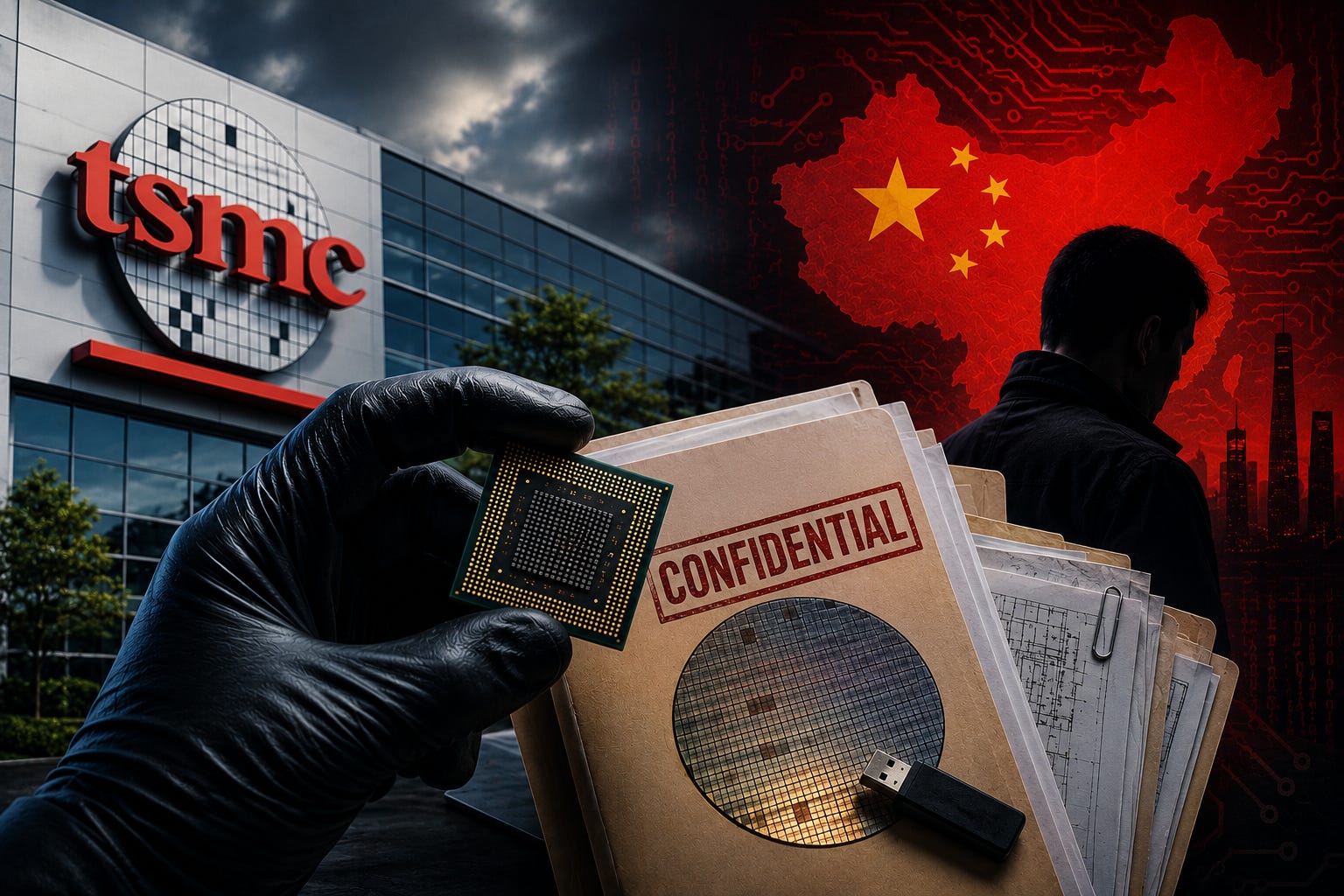
Taiwan’s High Prosecutors Office Intellectual Property Branch announced on July 20 that it has indicted a former deputy manager at Taiwan Semiconductor Manufacturing Company (TSMC), surnamed Chen, accusing him of conspiring with Hong Kong-born Chinese national Ding Xiaohu to establish a semiconductor materials analysis company in China and illegally copying 21 confidential TSMC semiconductor technologies with the intention of transferring them for use in China.
Prosecutors charged Chen with violations of Taiwan’s National Security Act and Trade Secrets Act, and have asked the court to sentence him to seven years in prison.
“Project Blue Ocean” Allegedly Aimed to Build China’s Semiconductor Capabilities
According to the indictment, between 2023 and 2024, Chen allegedly collaborated with Ding—described by prosecutors as an intelligence operative working for the Chinese Communist Party—to establish a semiconductor materials analysis company in China known as CSMAC.
Chen allegedly drafted a proposal called the “Project Blue Ocean,” which envisioned recruiting experienced TSMC engineers and other semiconductor professionals to work in China. The broader objective was reportedly to strengthen China’s semiconductor industry while gradually eroding Taiwan’s technological leadership.
To convince Chinese investors and technical experts of his capabilities, Chen is accused of illegally copying 21 confidential TSMC documents, including both national core technologies and general trade secrets related to semiconductor manufacturing processes and materials.
Prosecutors allege that Chen intended to use these materials in China.
Taiwan’s First National Core Technology Leakage Case
The High Prosecutors Office described the case as Taiwan’s first criminal prosecution involving an attempted transfer of national core semiconductor technologies to mainland China.
The investigation originated from a broader counterintelligence case targeting Ding Xiaohu, who was suspected of developing a Chinese espionage network in Taiwan. While examining seized evidence in that investigation, authorities discovered evidence suggesting that Ding and Chen had jointly obtained and reproduced TSMC trade secrets.
Ding later died before the investigation concluded, and prosecutors therefore dismissed charges against him.
Alleged Chinese Intelligence Links
According to investigators, Ding Xiaohu was a Hong Kong passport holder and Chinese citizen who allegedly worked for Chinese intelligence.
Beginning in 2018, he reportedly entered Taiwan multiple times under the pretext of religious exchanges related to the Mazu faith, business activities, or tourism. Authorities allege he spent more than NT$10 million building a Chinese espionage network that successfully recruited several active-duty and retired Taiwanese military officers to collect classified information.
Investigators further allege that Ding encouraged military contacts to refrain from resisting in the event of a cross-strait conflict.
Before his espionage trial was scheduled to conclude in April 2026, Ding died of illness while in detention.
The indictment also states that Ding may have been connected to the Political Work Department of China’s Central Military Commission, although the investigation into him ended following his death.
TSMC Retrieved All Copied Documents
According to prosecutors, Chen allegedly copied the confidential documents without authorization and took them home to study.
TSMC detected unusual activity during an internal audit and launched an internal investigation, successfully recovering all 21 illegally copied technical documents before they were transferred outside the company.
Authorities subsequently searched five locations, conducted extensive interviews with Chen and related witnesses, and analyzed electronic records and other evidence before concluding that sufficient evidence existed to file criminal charges.
Prosecutors Seek Seven-Year Prison Sentence
Prosecutors emphasized that TSMC is the world’s leading semiconductor foundry and a critical supplier to companies including Nvidia and Apple.
They argue that Chen ignored professional ethics and fair competition by illegally reproducing confidential technologies to support the “Project Blue Ocean” in China and contribute to the development of China’s semiconductor industry.
On that basis, prosecutors have requested that the court impose a seven-year prison sentence.
Growing Focus on Protecting Taiwan’s Semiconductor Technology
The case comes as Taiwan has continued strengthening legal protections for semiconductor technologies amid growing concerns over Chinese recruitment of Taiwanese engineers and attempts to acquire advanced chip manufacturing know-how.
As the primary manufacturing partner for many of the world’s leading technology companies, TSMC occupies a strategic position not only in the global semiconductor supply chain but also in Taiwan’s economy and national security.
Authorities described the successful investigation as an important milestone in Taiwan’s efforts to safeguard its semiconductor industry’s core technologies and combat industrial espionage.
REFERENCE
ABMedia - 台積電前副理竊 21 份機密文件!助力中國「藍海計畫」 求刑 7 年
Liberty Times - 全國首例!台積電副理外流核心技術 為中密謀「藍海計畫」檢起訴求刑7年