
A friend of mine is a senior engineer at a semiconductor fab in Hsinchu. Over coffee, he told me about a run-in with his toughest critic yet: his five-year-old daughter. Out of the blue one night, she asked what he does all day. He answered truthfully. Wafers, lithography, nanometer nodes, yield rates. She blinked, picked up her chopsticks, and went back to her noodles. Case closed, verdict delivered, no appeal.
“I told her exactly what I did,” he said. “And immediately, her face went blank.”
The question underneath is not a joke. How do you explain something as complex as semiconductors to someone with no background in the topic, when the audience is not a five-year-old but an investor or a banker whose read on your business decides whether a loan gets approved?
My advice to him: talk at her level, but never dilute the message. That is a tall order. It is not impossible.
Turning Your Audience Into Your Megaphone
Think of communication as a transaction. Being correct is not enough. Your audience has to digest your message, remember it, and repeat it accurately to someone who was not in the room: an investor pitching your idea to their partners, a teammate relaying your instruction to the next shift. If the message survives that relay intact, you have turned your audience into your megaphone.
Why Expertise Makes This Harder, Not Easier
Albert Einstein is often credited with the line, “If you can’t explain it simply, you don’t understand it well enough.” Nobody can find him actually saying it, so treat it like a physicist’s napkin math: useful, unverifiable, and true anyway.
Chip Heath, professor at Stanford Graduate School of Business and co-author of “Made to Stick”, calls this the curse of knowledge: once you know something well, it becomes almost impossible to imagine what it is like not to know it. Expertise, left untranslated, becomes a wall instead of a bridge, and nobody climbs a wall out of politeness.
The fix is not to dumb the material down. It is to build a bridge the listener can actually walk across, without losing what makes the message true.
Four moves that work

Anchor it to something already known. A semiconductor becomes a library, small enough to lose in a bowl of rice, holding billions of tiny switches that flip on and off fast enough to remember, calculate, and talk to other libraries. The listener does not need a new mental model. They need an old one, borrowed.
Chunk it. Nobody holds six new ideas in their head at once. Almost everyone holds three. My friend’s library analogy carried exactly three: tiny size, billions of switches, speed. Everything else could come later, once she asked, which, if you have met a five-year-old, she will.
Run the Feynman loop. Explain the concept in plain language, notice exactly where it breaks down, return to the source, then try again. The gaps are not embarrassing. They are the map of what still needs translating.
Lead with a person, not a mechanism. Jennifer Aaker, professor at Stanford Graduate School of Business, has studied why some messages stick and others vanish. Her research finds that audiences remember stories far more reliably than facts and figures alone. A chip explained through a five-year-old’s question is more memorable than a chip explained through a spec sheet, even to an audience of engineers.
The Test
The amateur move: “Our fab achieves sub-5-nanometer process nodes with industry-leading yield optimization.”
The master move: “We make the chips small enough and precise enough that your phone in your pocket has more computing power than the room-sized computers that sent astronauts to the moon.”
Same fact. One requires a glossary. The other survives being repeated by someone who has never heard the word lithography in their life.
Steve Jobs ran the same playbook at the iPod launch in 2001. The engineering team could have led with the spec: a 5 gigabyte hard drive. Jobs led with the outcome instead: “1,000 songs in your pocket.” The spec still existed. It just stopped being the headline.
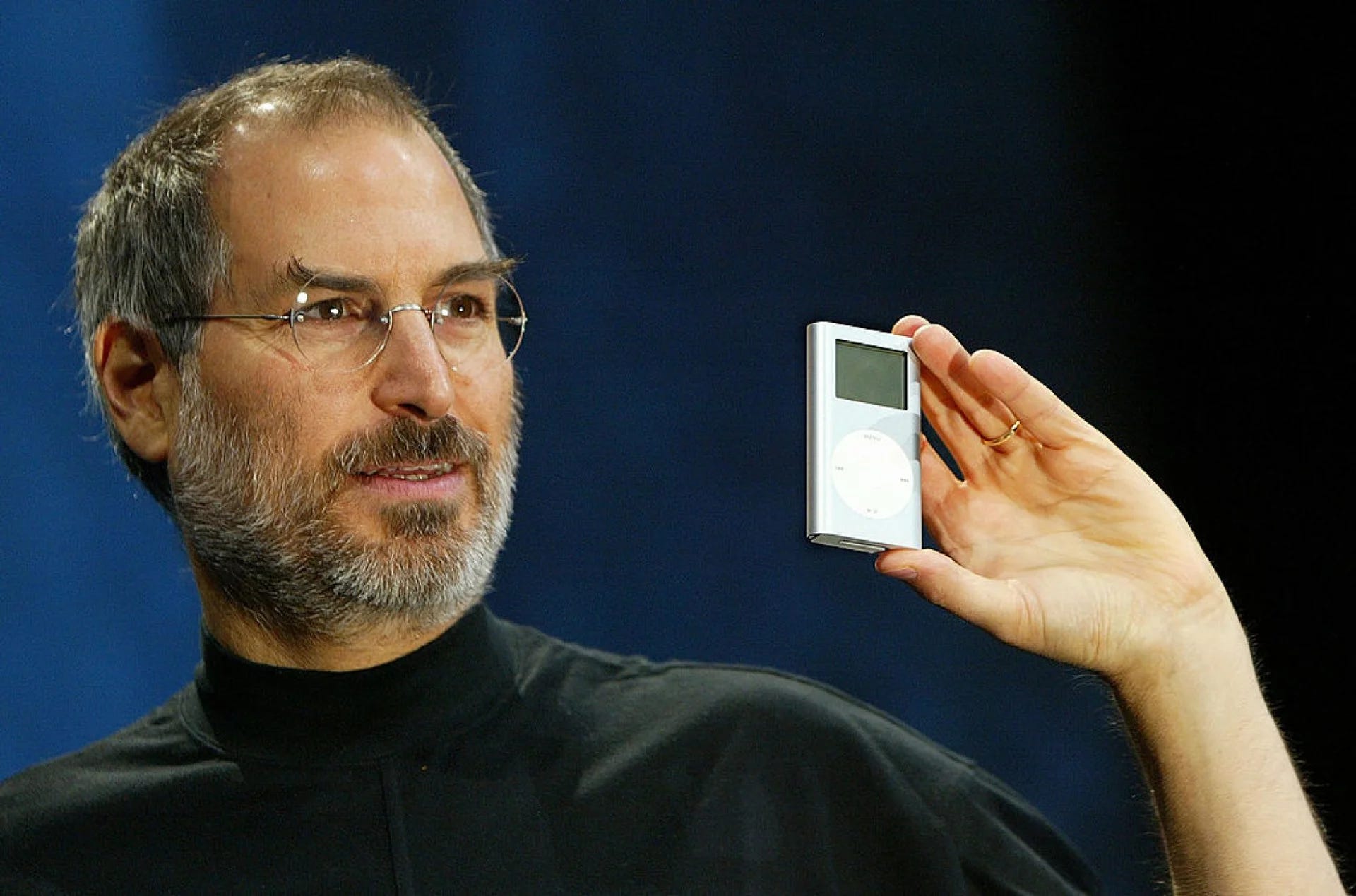
Digestible, remembered, repeatable is not a slogan. It is a sequence, and each word depends on the one before it. The real test of simplification is whether the person across from you can turn around and say it to someone else, correctly, in their own words.
My friend told me a few weeks later. His daughter had told her kindergarten class that her father built tiny libraries that never forget, which was why her tablet could remember her favorite shows. Nobody in that classroom could define a semiconductor. All of them, for a few minutes, understood one, and one of them had just repeated it perfectly. Somewhere, an engineer’s chest swelled with more pride than any yield rate ever gave him.
About the author: