
Beyond the Deck #20: The Unseen Engine: Why Founder Resilience is the Ultimate Competitive Advantage
The Unspoken Skill Every VC Secretly Backs.
In the gleaming, hyper-optimised world of start-ups, we celebrate the visible metrics: the hockey-stick growth curve, the eye-watering funding rounds, the disruptive tech demos that go viral. We lionise the founder as visionary, the charismatic force of nature who sells the dream. Yet, in the quiet corners of founder forums, in the late-night messages between CEOs, and in the unspoken understanding when two entrepreneurs share a weary smile, a different, more critical currency is traded. It’s not charisma, nor even sheer intellect. It’s resilience.
For anyone building a company from the ground up whether you a first-time founder with a seed round or a venture capitalist backing the next unicorn, understanding this intangible quality is not a soft-skills afterthought. It is the fundamental, unseen engine of every success story. It is what separates the ephemeral flash from the enduring flame.

Beyond Bouncing Back: Resilience as a Dynamic Force
Resilience is often mis-sold as mere “bouncing back.” That implies a return to a previous state, like a rubber band. But in the start-up crucible, you are never the same after a major setback. True founder resilience is less about bouncing and more about adaptive regeneration. It’s the capacity to absorb a body blow such as, a key client loss, a critical product flaw, a co-founder departure, a funding round collapsing at the eleventh hour and not just recover, but to metabolise that experience into a stronger, wiser, more formidable version of yourself and your company.
Think of it as the psychological and emotional equivalent of anti-fragility. While your balance sheet might be fragile under stress, your mindset can be designed to benefit from chaos. The resilient founder doesn’t see a failed product launch as pure loss; they see it as the market delivering customer research for free. They don’t view a brutal rejection from an investor as a verdict on their dream, but as a data point refining their pitch and clarifying their conviction.
The Anatomy of the Resilient Founder
So, what does this resilience consist of? It’s not stoic, unfeeling endurance. Rather, it’s a composite of several key attributes:
Emotional Granularity: The resilient founder doesn’t simply feel “stressed.” They can identify the specific flavours of their discomfort: is it anxiety about payroll, grief over a strategic misstep, or frustration with a team member’s performance? This precision allows for targeted coping, not just blanket suppression. They grant themselves permission to feel the blow, but with a stopwatch. “I will wallow in this for one hour, then we move.”
Radical Realism (Pessimism of the Intellect, Optimism of the Will): This phrase, often attributed to Gramsci, is the resilient founder’s mantra. They confront the brutal facts of their current reality without flinching – the cash runway, the competitor’s move, the internal team conflict. They are pessimists about the immediate hurdles. Yet, concurrently, they hold an unshakeable, almost irrational optimism about the long-term mission and their ability to navigate towards it. They separate the weather from the climate.
Cognitive Flexibility: Dogma is the enemy of resilience. The founder who falls in love with their initial solution is doomed. The resilient founder falls in love with the problem. This allows them to pivot without an identity crisis. They can discard a failing strategy, not as an admission of failure, but as a demonstration of strategic agility. Their ego is not tied to being right; it’s tied to winning.
Purpose as an Anchor: When the storm hits, and it will, motivational posters and TAM slides won’t hold you. Only a deep, authentic connection to your ‘why’ will. Is it to solve a genuine problem you’ve personally felt? To change an industry for the better? This purpose is the anchor that keeps the ship from being dashed on the rocks of despair. It’s the answer to the 3 a.m. question: “Why am I putting myself through this?”
Building the Resilience Muscle: It’s Not Just Born, It’s Forged
The comforting myth is that resilience is an innate trait, something you either have or you don’t. That’s dangerous nonsense. Resilience is a muscle, and like any muscle, it can be trained and strengthened. Founders and their backers must be proactive in building it.

For Founders
Normalise the Struggle: Break the culture of “fake positivity.” Be selectively vulnerable with your leadership team. Admitting, “This is really hard right now, but here’s our plan,” builds immense trust and collective resilience.
Cultivate a ‘Board of Directors’ for Your Life: Your support network cannot be just your investors (who have a financial agenda) or your employees (who rely on you). You need mentors, peers, a therapist, or a coach, people who care for you, not just your company’s valuation.
Practice Deliberate Recovery: Resilience requires energy to burn. Founders often glorify burnout as a badge of honour. It is a failure of strategy. Schedule non-negotiable recovery: sleep, exercise, true disconnection. Your company’s most valuable asset is your clear, creative, and decisive mind. Deplete it at your peril.
Conduct Pre-Mortems: Before a big launch or fundraise, don’t just plan for success. Rigorously brainstorm what could go wrong. This “prospective hindsight” inoculates you against shock and prepares a neural pathway for a calm, procedural response when trouble arises.
For Venture Capitalists and the Ecosystem:
Look Beyond the Confidence: When assessing a founding team, dig beneath the polished exterior. Ask about past failures and what was learned. Probe their support structures. A founder who acknowledges their need for a support system is often stronger than the one who claims to be an indestructible island.
Fund the Foundation, Not Just the Firework: Encourage founders to invest in leadership coaching, executive health, and team well-being. This isn’t a charitable perk; it’s R&D for the company’s core operating system. A burnt-out founder makes catastrophic decisions.
Share Your War Stories: The most valuable thing a VC can often offer isn’t just cash, but normalisation. Sharing tales of portfolio companies that nearly died but recovered, or of your own professional setbacks, gives a founder a psychological map through the valley. It tells them, “This is part of the journey, not the end of it.”

The Resilience Dividend
The payoff for cultivating this resilience is immense. It creates a cultural ripple effect throughout the organisation. A resilient founder breeds resilient teams – groups that are agile, psychologically safe, and fearless in the face of challenges. It also leads to better decision-making under pressure; panic breeds stupidity, while calibrated resilience breeds clarity.
In the long arc of a start-up’s journey, market conditions will shift, technologies will evolve, and luck will play its fickle part. The one constant is the founder at the helm, navigating the chaos. Their resilience is the shock absorber for the entire venture. It is the difference between a company that shatters at the first major setback and one that gets up, learns, adapts, and ultimately dominates.
So, the next time you look at a dazzling pitch deck or a soaring valuation, ask the unseen question: what is the quality of the resilience that built this? For in the relentless marathon of building something from nothing, it is not the fastest sprint, but the toughest constitution, that most often crosses the finish line.
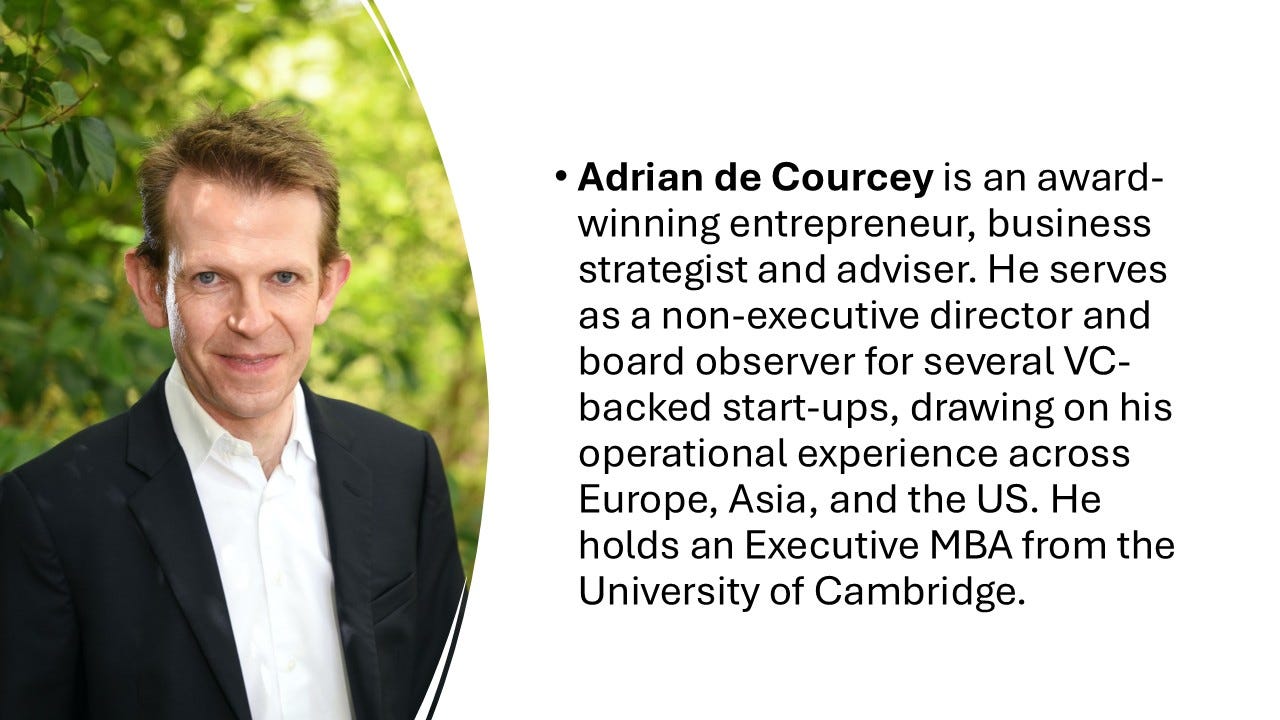
Editor’s note: The article was first published on Adrian’s own Substack.
About the author:
you are accrate founder resilience. it's such a key metric to success