
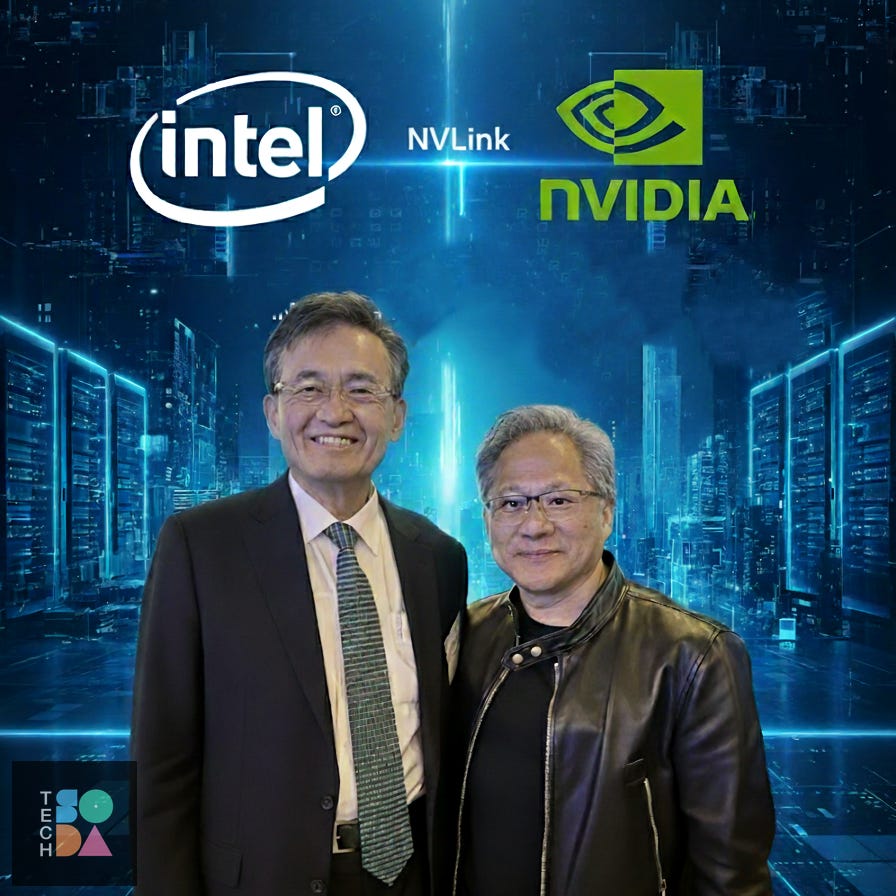
Nvidia's strategic decision to invest $5 billion in Intel and form a deep technology partnership is a multi-faceted move with profound implications for the semiconductor industry. This alliance, announced in a "historic collaboration" by Nvidia CEO Jensen Huang and Intel CEO Lip-Bu Tan, goes far beyond a simple product roadmap. It's a calculated masterstroke designed to address two major strategic objectives: neutering the competitive threat from AMD and aligning with U.S. national interests.
A Historic Partnership
The core of the deal involves a joint effort to co-develop multiple generations of custom data center and PC products. This partnership will see Intel, a long-time competitor, build custom x86 CPUs for Nvidia, which Nvidia will then integrate into its AI infrastructure platforms. For the PC market, Intel will produce x86 system-on-chips (SoCs) that embed Nvidia's RTX GPU chiplets. This integration will be facilitated by Nvidia's high-speed NVLink technology, creating a symbiotic relationship that marries Intel's foundational x86 architecture with Nvidia's dominant AI computing ecosystem. To solidify this new bond, Nvidia is making a substantial $5 billion equity investment in Intel at $23.28 per share, a move that immediately boosted Intel's stock by nearly 23% and Nvidia's by 3.5% on the day of the announcement. This financial commitment signals a long-term, strategic intent, not just a one-off project.
One Stone, Two Birds: The Strategic Logic
The "one stone, two birds" analogy perfectly captures the strategic brilliance of this deal. The first "bird" is AMD, which has been steadily gaining market share in both the CPU and GPU markets. For years, AMD has presented a unified front, offering both x86 CPUs and GPUs that compete directly with Intel and Nvidia, respectively. The Nvidia-Intel alliance effectively disrupts this dynamic.
By locking in Intel as a partner, Nvidia creates a powerful, integrated front that makes it significantly more challenging for AMD to convince hyperscale and enterprise customers to adopt its competing CPU-GPU solutions. The deal sidelines the prospect of Intel and AMD aligning more closely, a scenario that would have posed a major threat to Nvidia's market dominance. Instead of a tri-polar struggle, the industry now appears to be a two-sided battle: Nvidia-Intel versus AMD. This strategic positioning ensures that Nvidia can continue to focus on its core strength—AI acceleration—while leveraging Intel's established x86 ecosystem, a move that further entrenches its leadership position.
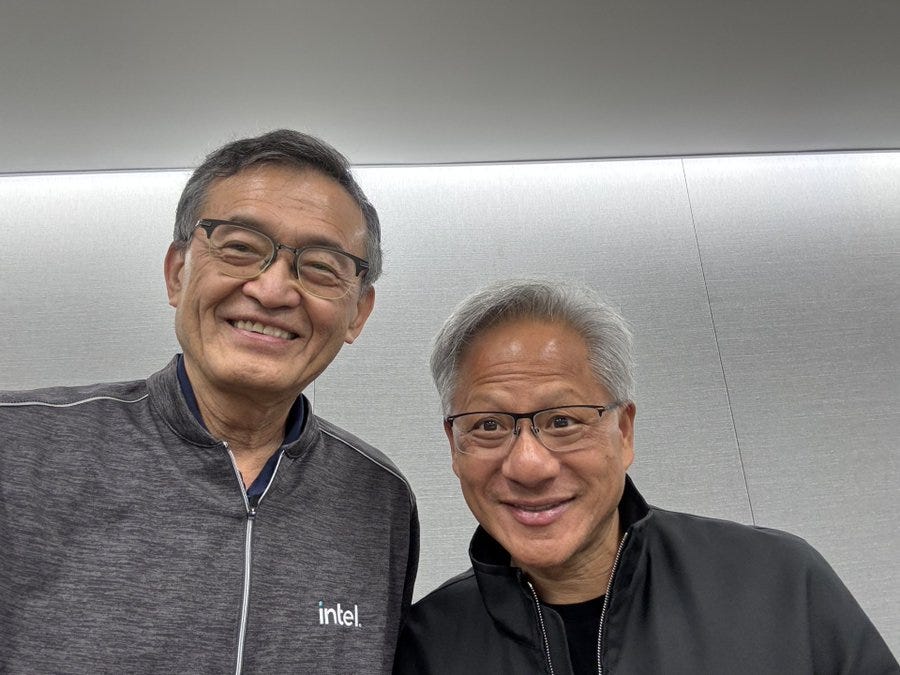
Winning Washington's Approval: A Geopolitical Gambit
The second "bird" is political. In an era of heightened geopolitical tensions and a strong emphasis on domestic manufacturing, securing favor with Washington is a critical business objective. The Biden and Trump administrations have both underscored the importance of onshoring semiconductor capacity as a matter of national security, with the U.S. government even taking a 9.9% stake in Intel through the arrangement for CHIPS Act fund allocation. By investing billions into Intel, a company seen as America's "crown jewel" in x86 production, Nvidia is effectively demonstrating its alignment with the U.S. government's industrial strategy. This move provides Nvidia with valuable political cover at a time when big tech consolidation is under intense regulatory scrutiny and China's competition policy remains a top priority.
Meanwhile, this alliance also offers Nvidia a strategic buffer against China's escalating tech nationalism, particularly following Beijing's actions to brand Nvidia's China-specific AI chips as security risks and initiate an anti-monopoly investigation.
Huang himself acknowledged the broader significance of the deal, describing it as a fusion of "two world-class platforms." This rhetoric is a subtle nod to the geopolitical reality: Nvidia, despite its global dominance, cannot afford to be seen as an isolated entity in a world where supply chains are being reshaped by national interests. The investment is an "insurance policy" against potential regulatory headwinds and a way to signal that Nvidia is a partner in, not a threat to, U.S. national security.
The Road Ahead
This partnership promises to reshape not only product roadmaps but also the entire landscape of industry alliances. For Intel, the deal is a significant lifeline, providing a much-needed financial boost and validating its turnaround for the foundry business. It gives Intel a share of Nvidia's booming AI ecosystem and renews its relevance in the high-growth data center market. For Nvidia, it's a strategic coup, neutralizing a primary competitor while demonstrating a commitment to U.S. national priorities. The immediate market reaction—a surge in both companies' stock prices—underscores the market's belief in the strategic value of this alliance.
However, the success of this alliance hinges on Intel's ability to execute. Analysts project a minimum of two years for Intel and Nvidia to fully design the joint products and prepare for manufacturing. A key question remains whether Intel can resolve its ongoing yield challenges to ensure the collaboration is commercially viable and delivers the anticipated synergy.
The other question is how AMD will respond. The Nvidia-Intel partnership is a direct challenge to AMD's integrated CPU and GPU strategy. While AMD remains a formidable innovator, it must now find its own countermove to avoid being squeezed between two of the industry's most powerful players.
"As the primary foundry for AMD and Nvidia, TSMC is unlikely to be negatively impacted by this deal,” Senior tech analyst Ming-chi Kuo asserts, “TSMC’s advantage in advanced semiconductor processes is likely to remain unbeatable before 2030.”
The "one stone, two birds" approach has not only defended Nvidia's market dominance but has also secured its political position, effectively picking champions in Washington's semiconductor strategy. The future of the industry will depend on whether AMD can innovate its way out of this tight spot or if this new alliance has fundamentally altered the competitive landscape for good.
Coming to this a bit late, but the "one stone, two birds" framing is exactly right. The political angle tends to get buried under the product roadmap talk, but Nvidia buying itself some Washington goodwill while simultaneously boxing AMD out of server CPU conversations is genuinely clever. I reckon the Grace-CPU-only deployment at Meta is the bit that shows Nvidia was already moving on CPUs before this deal; this partnership just makes it official. Wrote about the full-stack implications of that here if you're curious: https://reading.sh/the-gpu-king-is-coming-for-intels-crown-64f2a8421bd7